Your Family Is Asleep Right Now. Do You Actually Know What's Happening in the Air?
Carbon monoxide is invisible, odorless, and rising silently in homes across the country tonight — and most people have no idea what the number is in their own bedroom.
There is a specific kind of alertness that sets in when everyone else in the house has gone to sleep and you are still awake.
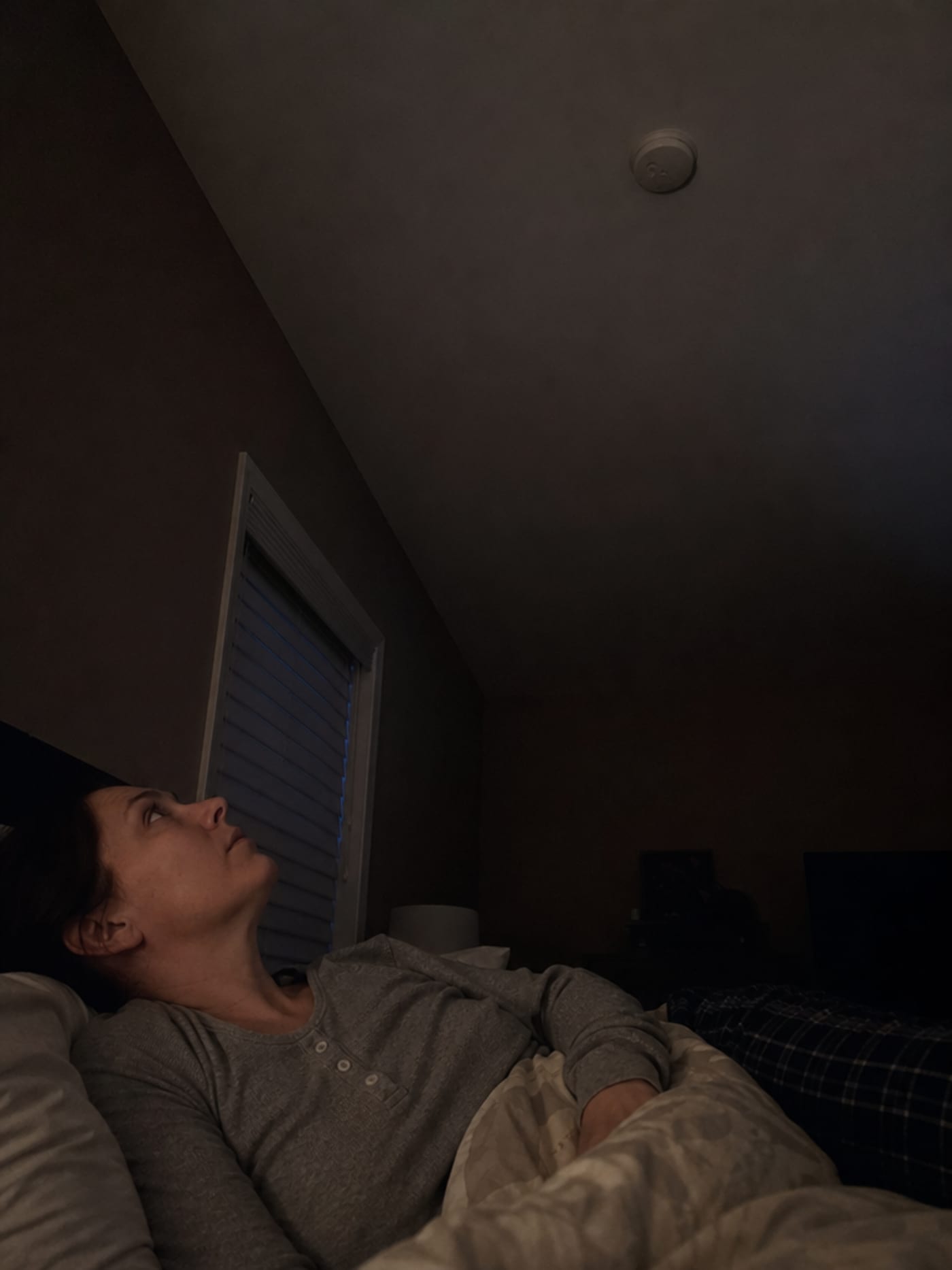
You know your furnace has been running since 9 PM. You know you cooked on the gas stove earlier. The house is quiet. The smoke detector on the ceiling is dark. Nothing is beeping. Nothing looks wrong.
And yet something sits at the edge of your mind that you can never quite resolve by looking around the room: you don't actually know what's in the air.
That is not a paranoid thought. Carbon monoxide has no smell. It has no color. It produces no visible sign in the early stages of rising concentration. The only way a standard alarm tells you anything at all is when the level crosses a preset threshold — and until that moment, the ceiling stays dark and silent, and you are simply left to assume. Most people do assume. The assumption is often fine. But it is still an assumption, made in the dark, about something invisible.
There is a different way to handle this. Not louder alarms. Not smarter Wi-Fi sensors. Something more direct: a device that shows you the actual CO reading in the room, right now, as a number on a screen — so the information is no longer hidden behind a threshold you can only hope is never reached.
That is the shift this article is about. And it starts with understanding why the gap between "no alarm" and "safe" is not as solid as most households treat it.
The Problem With "No Alarm" Is That It Doesn't Actually Mean "No Problem"
Most households run on a simple mental model: if the CO detector hasn't gone off, the air is safe. It is an understandable shortcut. It is also a gap that most people have never examined.
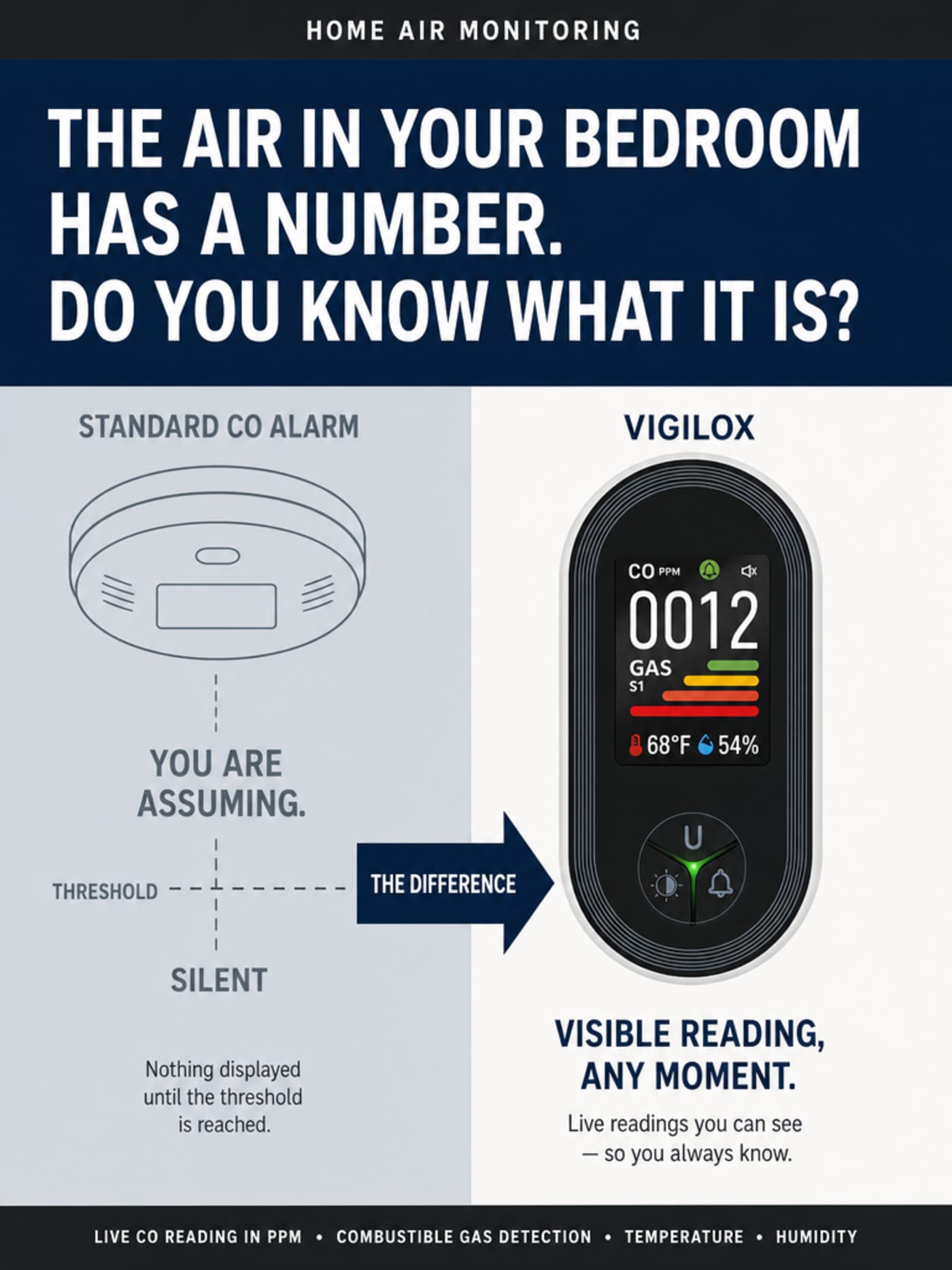
A standard CO alarm is designed to alert you when carbon monoxide concentration in the room crosses a specific threshold. Below that line, the device is silent. Nothing on the face of it indicates what the number actually is. It could be zero. It could be climbing. The device gives you no way to distinguish between those two situations — and you have no reason to think about it until the alarm sounds.
What that means in practical terms is this: there is a range of CO concentrations — low, sub-threshold, quietly rising — that a standard ceiling alarm simply does not surface for you. The alarm is not lying. It is doing exactly what it was designed to do. But "designed to alert at threshold" and "continuously showing you the reading" are not the same thing. One produces silence until a line is crossed. The other shows you what is actually happening.
For most people, this distinction is invisible. They go to bed. The detector on the ceiling is dark. They sleep. The air is treated as a fixed, known quantity — when in fact it is a dynamic environment that changes based on what appliances are running, what the ventilation is doing, and what is happening in adjacent rooms.
The families who notice this gap are rarely the ones who have had an emergency. They are the ones who started thinking about what their detector was actually telling them — and realized the answer was: nothing, until the moment it screams.
What Most Monitors Do vs. What a Live Reading Actually Gives You
Here is the distinction that matters, stated as plainly as possible.
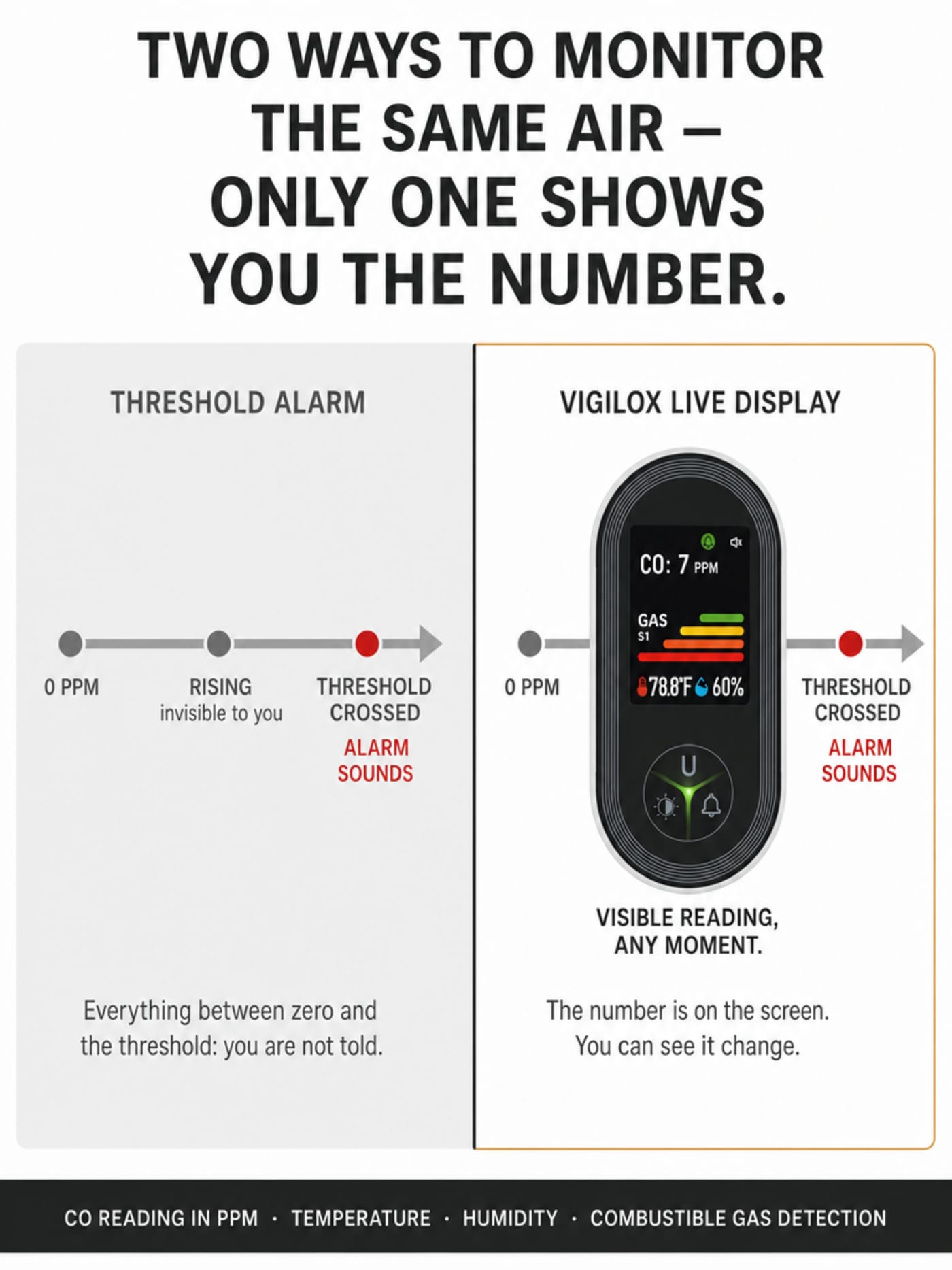
A threshold-based alarm processes what it measures against a preset limit. Below the limit: nothing communicated. Above the limit: alarm. The information that exists between those two points — the actual number — is processed internally and never shown to you. You are not getting the reading. You are getting a binary outcome at the end of a range you cannot see.
A device with a live display works differently. It converts the sensor reading into a visible number and puts that number on a screen, continuously, in real time. CO: 0 PPM. CO: 3 PPM. CO: 7 PPM. CO: 12 PPM. The number is not held until a threshold — it is shown to you as it exists, right now.
What that changes is the nature of the information you have access to. With a threshold alarm, you know the result of a comparison. With a live display, you know the actual state of the room. Those are different things, and they lead to different behaviors. A comparison-result tells you nothing until it fires. A live number lets you notice change before any alarm is warranted, understand what normal looks like in your specific rooms, and make a judgment about whether to open a window, check an appliance, or simply observe.
VIGILOX's color IPS screen displays a live CO reading in PPM — the actual number, updating continuously. It also shows temperature and humidity in real time, and it detects combustible gases separately with a dual audible and visual alarm. The display is bright and adjustable; it can dim at night so the light does not disturb sleep, and the screen can rotate 180° to orient correctly regardless of which direction the outlet faces.
The mechanism is not complicated. The point is simply that the number is visible rather than hidden, which is a different tool than a threshold alarm — not a replacement for one, but a different layer of information on top of it.
At 2 AM, Nobody Is Checking the Air. And Nobody Should Have To — If the Screen Is Already Doing It.
The specific vulnerability of nighttime is not that danger is more likely then. It is that the household's capacity to notice anything at all drops to zero.
Everyone is asleep. Nobody is moving through the rooms. Nobody is smelling the air near the furnace or checking the stove. Nobody is awake to hear a quiet change in how a gas appliance sounds. The house is operating on its own, and the people inside it have, by necessity, entirely switched off their ability to monitor what is happening.
This is exactly the condition in which a continuously visible reading matters most — and is least available to most households.
A ceiling alarm will still sound if a threshold is crossed. That part of the safety architecture remains in place. But below that threshold, during those hours, nothing is being surfaced. The air in the bedroom, the hallway, the room where your child is sleeping — it is changing or not changing, and no one in the house knows either way.
VIGILOX does not sleep. It is plug-in and always-powered — no batteries to drain, no low-battery chirp, no waking anyone up for a non-emergency reason at 3 AM. The display is running. The CO reading is on the screen. If something changes during the night, the number changes too. If something crosses a threshold, the dual audible and visual alarm fires.
The point is not that VIGILOX guarantees the night will be safe. It is that you are no longer relying entirely on the binary outcome of a silent detector. There is a visible reading. It is there when you wake up, when you check before bed, when you glance at it on the way to the kitchen. The information exists, and it is no longer hidden from you.
That is a different relationship with nighttime than most households have — and it costs nothing more than plugging a device into an outlet.
What Happens When the Number Actually Moves
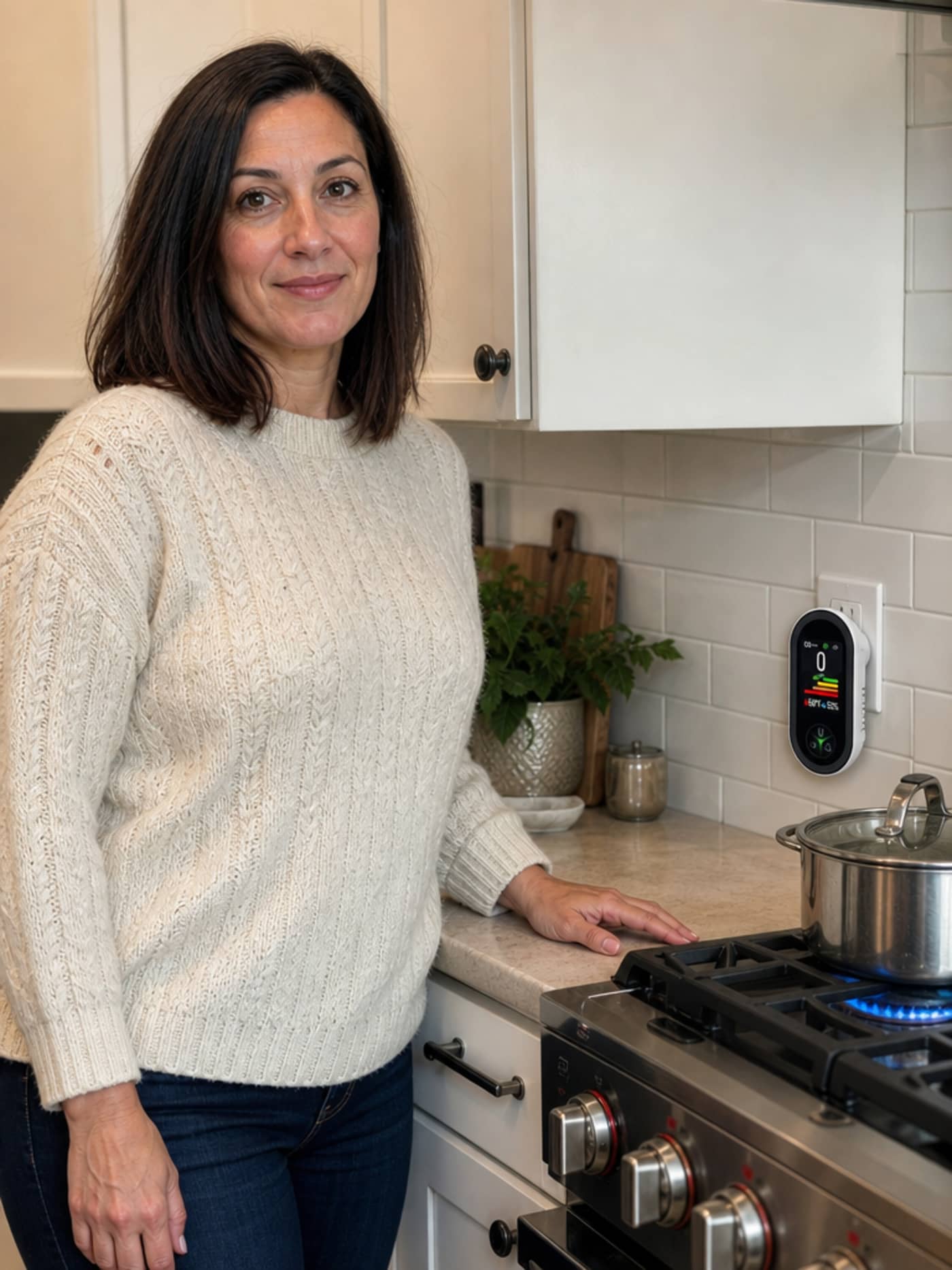
One of the things the device has been confirmed to do — in documented real-world use — is respond.
Not just to piped natural gas. To combustible vapors more broadly: stove gas, vapor from cleaning products, other combustible sources that are present in ordinary household environments. When the gas detection sensor responds, the dual alarm fires — audible and visual, clearly and loudly. When CO rises, the PPM number on the screen rises. The reading tracks what the sensor detects.
This matters because it shifts the device from theoretical to actual. A sensor you cannot test offers no reassurance that it is working. VIGILOX has a built-in alarm self-test function — you can trigger the alarm tone yourself to confirm it is working and hear exactly how loud and clear it is before you rely on it. The alarm is not subtle. Users who have tested it describe it as clearly audible from adjacent rooms.
The CO detection range is 0–999 PPM, with a stated tolerance of ±10%. The device detects natural gas, propane, methane, and butane. Temperature is displayed across 14–122°F. Humidity reads from 0–95% RH. These are the verified specifications.
One behavior worth knowing: the gas-type setting does require reconfiguration if the unit is unplugged. It is not a permanent setting that survives power loss. This is worth knowing in advance — set it when you plug in, check it if the unit has been unplugged for any reason. That is a minor operational step, not a limitation on what the device detects when it is running.
VIGILOX is also not a replacement for a certified UL 2034 CO alarm. That is important to state plainly. Keep your certified alarm in place. VIGILOX is a supplemental monitor — it adds a visible, continuous reading on top of the threshold-based alarm architecture you already have. The two things are different tools and both are worth having.
The full technical details, verified specifications, and offer information are on the product page — if this is making sense so far, the next step is simply to read how VIGILOX works and what it includes.
The Night You Stop Guessing Is the Night the House Actually Feels Different
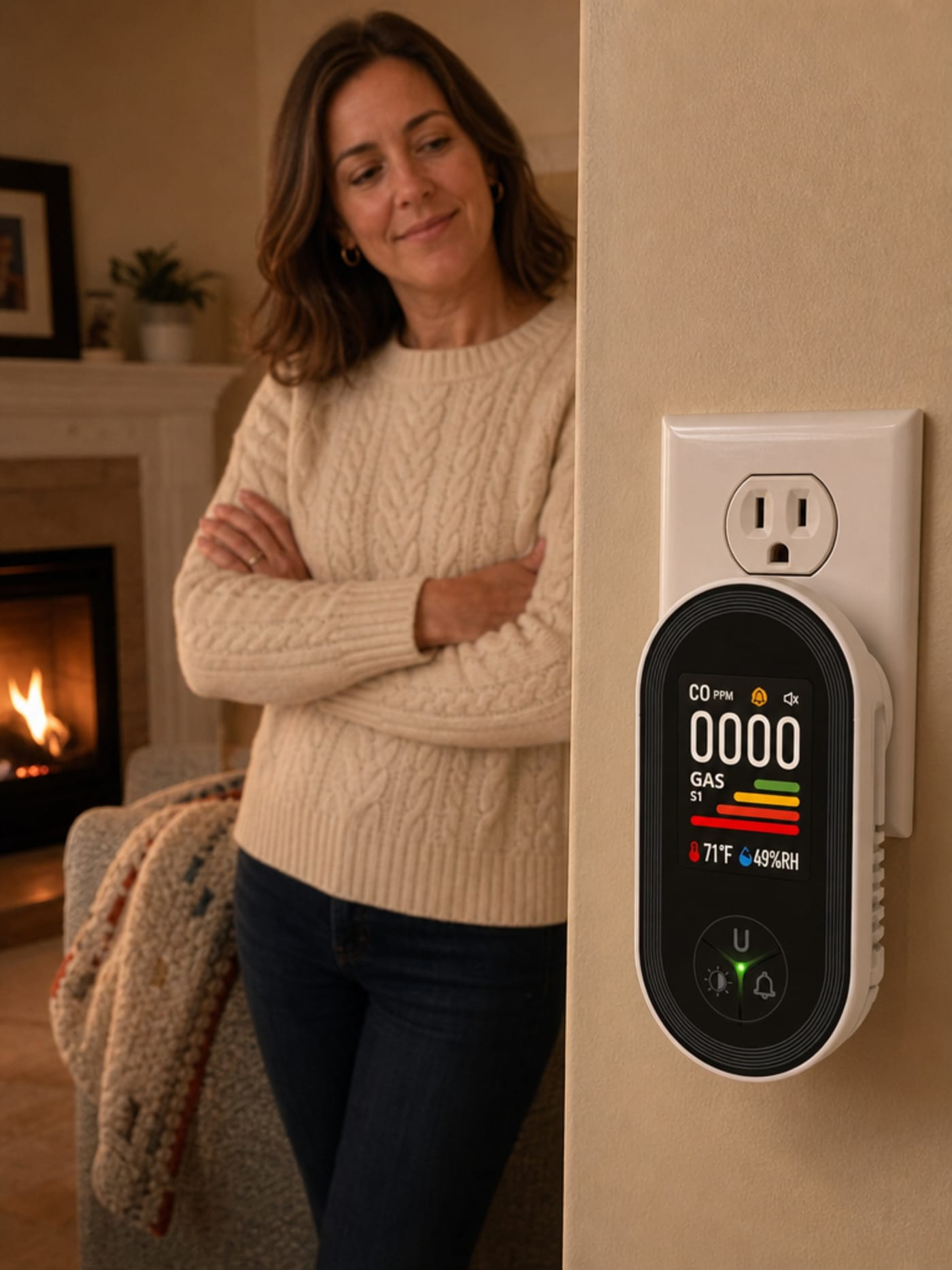
There is a before and an after with this kind of change, and it is rarely dramatic.
Before: you go to bed knowing the detector on the ceiling will alert you if something crosses a threshold, and you accept that between zero and that threshold, you simply have no information. The furnace runs. The house is quiet. You either sleep or you don't, but either way, you are guessing.
After: you glance at a screen before you go upstairs. CO: 0. Temperature: 68. Humidity: 52. You go to bed with a number, not an assumption. If something changes during the night, the device is running — still displaying, still detecting, still ready to alarm if a threshold is crossed. In the morning you can check the same way you check the thermostat.
This is not a dramatic transformation. It is a quiet one. The house did not change. The air is the same air it was before. What changed is the information you have access to, and that changes the quality of the assumption you are making when you close your eyes.
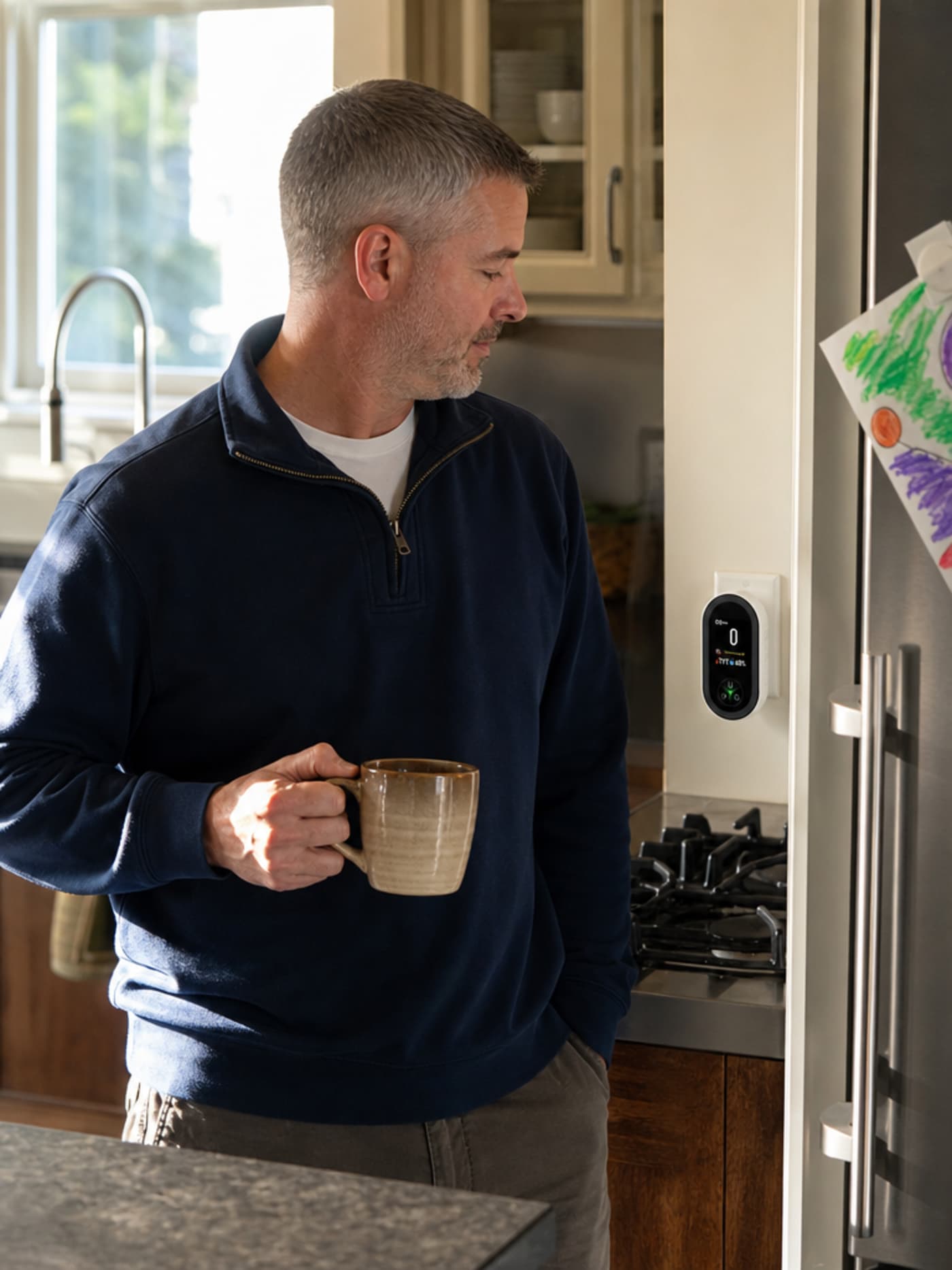
That shift — from guessing to knowing the number — is available every night, from the outlet beside the bed, in the hallway, in the kitchen, in any room where the question matters. It requires no wiring, no app, no subscription, no batteries. It just requires putting the device in the wall.
The people who make this change tend not to describe it in emergency terms. They describe it the way Renee did the first time she saw the number sitting at zero after the fireplace had been on for two hours: "I just didn't realize I had been assuming. Now I look at the screen and I can actually see what I was only guessing at before." That is the change. It is small. It is also the kind of thing, once you have it, you stop wanting to be without.
What Customers Are Saying
"I had no idea my standard CO detector never actually showed me a number. Once I plugged this in beside the bed I could see the reading was zero and actually felt calm enough to fall asleep. Does exactly what it says."
D.M. — Portland, OR
★★★★★
"The screen is bright, clear and easy to read from across the room. We have a gas furnace and a fireplace and knowing the number is right there on the wall makes a real difference. Well made, straightforward to set up."
Kevin R. — Columbus, OH
★★★★★
"We got two — one for the kitchen and one for the hallway outside the kids' rooms. Practical, plug straight in, no fuss. The self-test alarm is genuinely loud. Useful without feeling complicated."
Sarah T. — Austin, TX
★★★★☆
You Cannot See the Air in Your Home. But You Can See the Number.
Most households go to sleep trusting that a silent alarm means a safe room. That trust is not wrong — but it is built on a gap: the reading between zero and the threshold exists, changes, and is never shown to you by a standard alarm.
VIGILOX closes that gap. Not by replacing your CO alarm — keep that in place — but by adding the one thing a threshold alarm cannot give you: a continuously visible number.
- Live CO reading in PPM, on-screen, all the time — not only when a threshold is crossed
- Combustible gas detection with dual audible and visual alarm — natural gas, propane, methane, butane
- Temperature and humidity displayed simultaneously — four readings, one screen
- Always powered, no batteries — plug directly into any standard wall outlet, no wiring
- Self-test function — you can hear the alarm before you need it
The full details — how it works, what is included, and how to get it — are on the product page. If the question "do I actually know what's happening in the air tonight?" has been sitting in the back of your mind longer than you'd like to admit, the answer is one screen away.