When the Date Can't Move, Being Unprepared Is the One Thing You Can Control
For anyone who has a shift, an exam, a presentation, or a deadline with a fixed date — and a period that may arrive right alongside it.
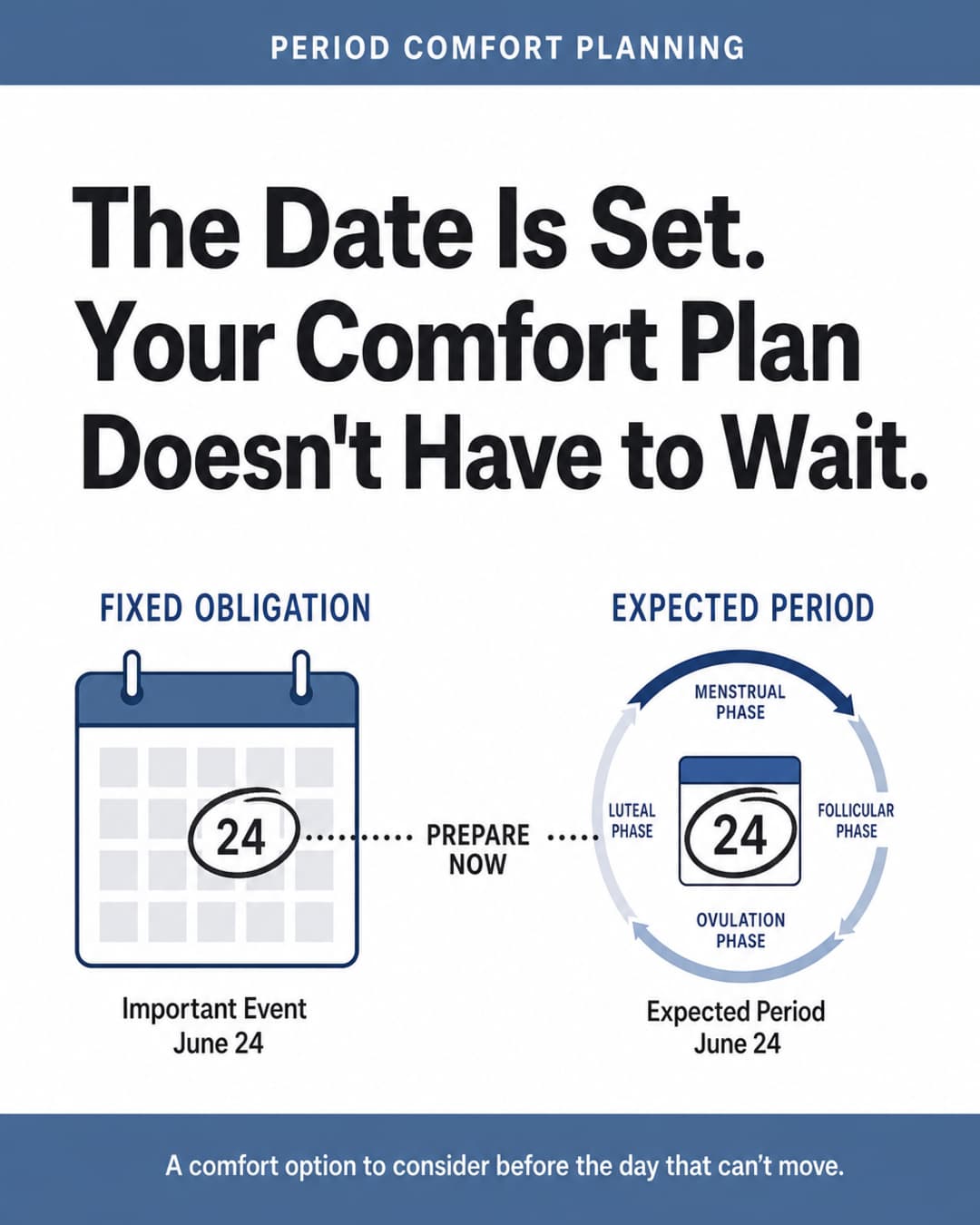
There is a specific kind of pressure that comes not from the work itself, but from the collision of two unmovable things on the same calendar.
You already know about the obligation. The exam date was published at the start of the semester. The shift schedule went up three weeks ago. The client presentation has been on the calendar since October, and the stakeholders are flying in for it. These are not flexible. They do not bend around how you feel on a given morning, and asking for an extension is either impossible or carries a cost you are not willing to pay.
And then, tracking your cycle, you realize: your period is expected right around that same window.
It is not the same as generic period anxiety. This is something more specific — the awareness that on a day when your full concentration is already spoken for, you may also be managing cramping, fatigue, or the low-grade distraction that comes with significant discomfort. You are not looking for a miracle. You are looking for something practical you can do before the day, so that when it arrives, you have already thought about your comfort.
That is what preparation actually looks like for a fixed obligation — and it is the only part of that day you still have a say in.
The Thing Nobody Talks About in the Pre-Shift Briefing
There is a moment that happens the night before a high-stakes day that most people never mention out loud.
You are reviewing your notes, or laying out your work clothes, or checking tomorrow's schedule one more time. And underneath all of that practical preparation, there is another calculation running — a quiet, low-level triage of what your body might do tomorrow and what you will do about it.
For a lot of people, that calculation centers on one question: Am I going to be able to concentrate?
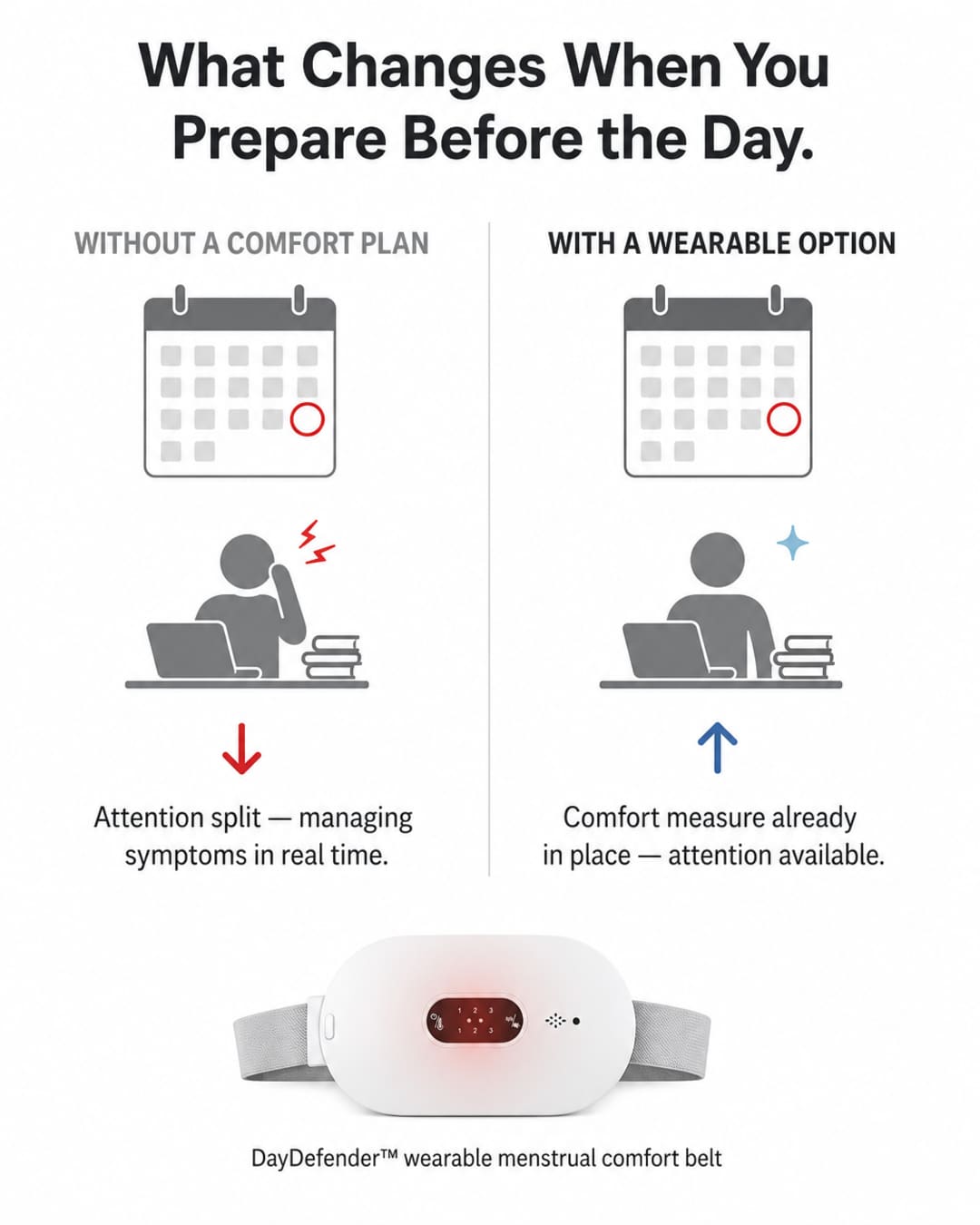
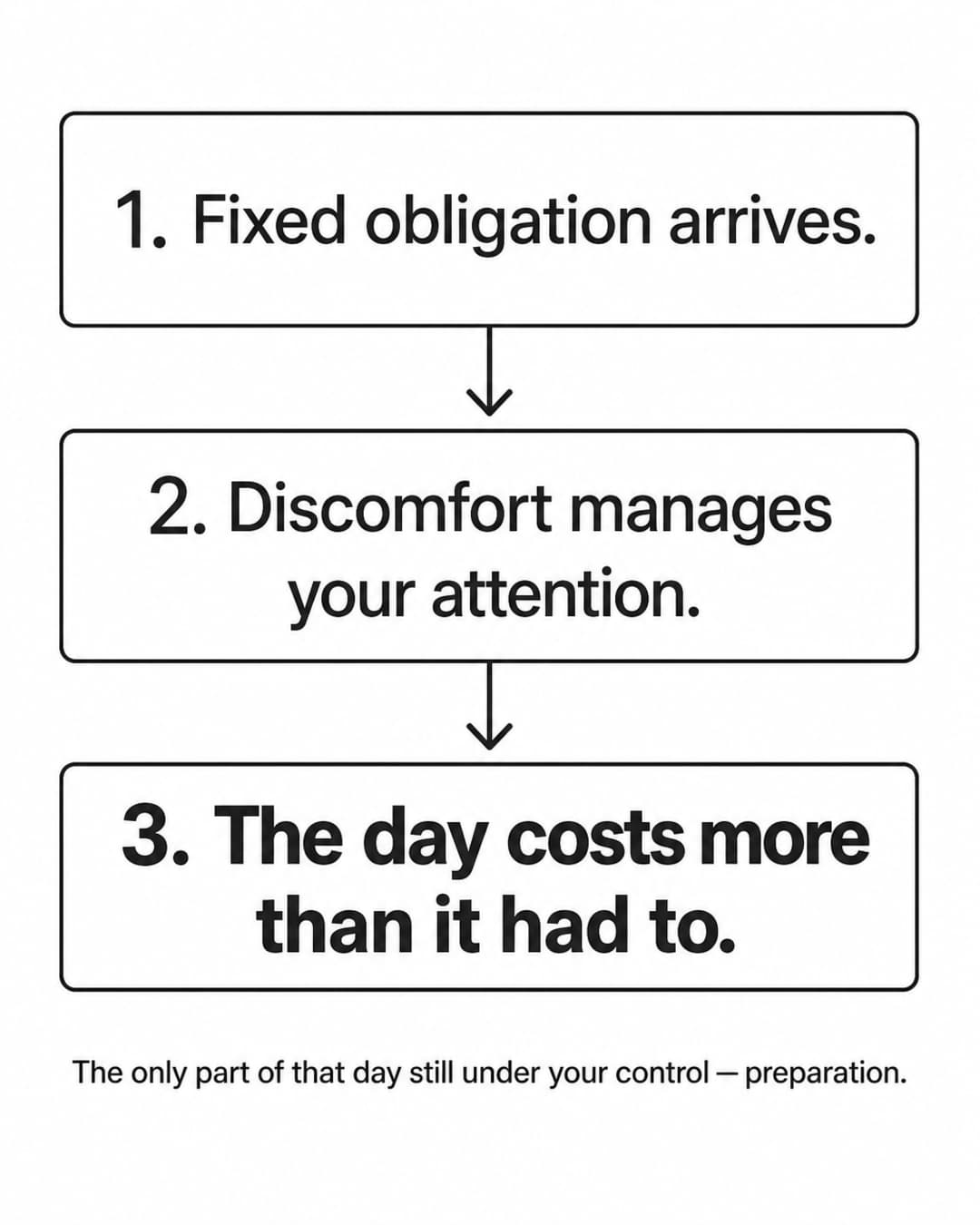
Menstrual cramping, when it shows up on a day with no margin, is not just a physical sensation. It is a tax on attention. It is the part of your brain that is supposed to be tracking the thread of a conversation, or holding the structure of an argument, or simply keeping your face composed during a long meeting — partially occupied with something else instead. You are not incapacitated. You are just not fully there, and on most days that is manageable, but on a day that has something riding on it, it matters more.
The frustration is not that the discomfort exists. It is that you found out about it when you were already at the exam desk, or already halfway through a shift, or already sitting across from a client. There was no time left to prepare. There was only time to manage.
That moment — realizing the day is already difficult and you are out of options — is the one this product was designed to be a response to. Not after. Before.

What a Wearable Comfort Belt Actually Does (and What It Does Not Claim)
When most people think about managing period discomfort away from home, they think in two categories: medication, or waiting it out.
There is a third category that does not get discussed as often, partly because it is newer and partly because the claims around it are sometimes overstated. A wearable menstrual comfort belt is not a pharmaceutical. It does not promise a specific level of pain reduction, and any product that makes that promise with a number attached deserves skepticism. What it is, in the documented sense, is a device you wear against your lower abdomen that delivers warmth and, in most configurations, gentle vibration to the area where cramping typically concentrates.
The mechanism matters here, and it is worth understanding before you decide whether this belongs in your preparation.
Heat applied to the lower abdomen has a long history as a comfort measure for menstrual cramping — it is not new, and it is not obscure. The difference between a traditional heating pad and a wearable belt is the portability: you are not tethered to a wall outlet or limited to lying down. The device goes with you. It can be worn while you are at a desk, while you are standing during a shift, while you are moving through a day that has a structure to it. The vibration component, where present, adds a second layer of sensory input to the same area.
What it does not do: it does not guarantee relief, it does not replace clinical evaluation for severe or persistent pain, and it is not a treatment for any diagnosed condition. The honest version of this product's value is preparation — having a comfort option already in place before the day begins, rather than searching for one when the day is already hard.
That is the mechanism read clearly. The question the next section raises is what the cost of not having it looks like in a fixed-obligation context — and that number is more concrete than it sounds.
The Shift Nobody Accounts for in the Shift Schedule
Consider what a single difficult period day costs in a fixed-obligation context.
Not in the abstract. Concretely.
A retail shift during the holiday season runs eight, sometimes ten hours. You are on your feet. The floor is busy. You are expected to be functional, visible, and helpful to customers who are themselves stressed about their own end-of-year timelines. There is no sit-down break long enough to meaningfully address significant cramping, and calling out — when the schedule was finalized weeks ago and the season is the whole point — carries a real cost. Not a hypothetical cost. A cost in the form of a conversation with a manager, a note in a file, a shift that still has to be covered by someone, a week that starts with a deficit.
Or: it is not a retail shift. It is a final exam in a class where attendance and performance have been accumulating toward this single date for four months. You cannot defer it by a day because you are uncomfortable. You sit in the room, you write for three hours, and whatever cognitive resources are occupied by physical discomfort are not available for the questions on the page.
Or: it is a year-end presentation, and the people in the room have traveled for it. The slides are ready. The argument is prepared. The discomfort you are managing is invisible to them, but it is not invisible to the part of your brain that is trying to hold the thread of what you planned to say.
None of these scenarios is catastrophic in a medical sense. But each of them represents a real tax — on attention, on energy, on the version of yourself you wanted to show up as for something that mattered.
The product does not eliminate that tax. But it can reduce the chance that you walk into any of those situations without having thought about your comfort options first. Preparation, done before the day, is the one variable that was still under your control.
Which brings up the part most people skip: what the alternatives actually look like when you compare them side by side.
Why a Portable Option Changes the Equation a Heating Pad Cannot
The most common alternative people reach for when menstrual cramping is an issue is also the most constrained one.
A traditional heating pad works. That is not the argument against it. The argument is what it requires: a power outlet, a flat surface, the ability to lie down or at least sit very still, and time that a fixed-obligation day does not have. It is a tool built for your living room on a day when you do not have anywhere to be. It is not built for a retail floor, an exam hall, or a conference room.
Over-the-counter medication is the other default, and again — it works for many people, some of the time. The honest answer is that it does not work the same way for everyone, and it requires anticipating the discomfort far enough in advance that the timing is right, which is its own variable.
What a wearable belt offers, in the category comparison, is not superiority to either of those options in a controlled environment. It is portability. It goes where the obligation is. It can be worn while you are standing, seated, or moving — without being tethered to an outlet or requiring you to stop what you are doing to use it. It is a comfort option that is structurally compatible with a day that has a structure.
The relevant question is not whether this is the best possible solution in every situation. It is whether having this option, prepared in advance, changes what a fixed-obligation day with a period looks like — versus arriving at that day without it.

The Version of That Day You Were Actually Preparing For
There is a specific feeling that comes with finishing a high-stakes day well.
Not effortlessly — nobody expects that. But finishing it in a way where you were actually present for it. Where the presentation went the way you had prepared it to go, or the exam reflected what you had studied, or the shift ended and you had handled what the day required. Where the obligation did not beat you by taking resources you needed for it and redirecting them somewhere else.
That feeling is available on a period day. It is not guaranteed by any product, and it would be dishonest to suggest otherwise. But it is more available when you have thought about your comfort options before the day starts — when you have already prepared a response to the variable you saw coming — than when you walk into the room without one.
Jordan, sitting down for her final, had packed the belt the night before. Not with certainty about how it would go. With the practical satisfaction of having addressed the one thing she could address before the exam clock started. Maya, clocking into her holiday shift, had done the same thing. The shift was still long. The floor was still busy. But the layer of her attention that might have been consumed by scrambling for options — that layer was already handled.
That is what preparation looks like in this context. Not a promise that the day will be easy. A decision, made in advance, that the day will have one fewer unaddressed variable in it.

What Customers Are Saying
"I had a big work deadline and my period arrived right on cue. I'd ordered this a couple of weeks earlier just in case, and I'm genuinely glad I did. It was easy to use and meant I wasn't scrambling on the day."
Rachel T., Chicago, IL
"I work retail and the holiday schedule doesn't move. Having this packed in my bag before my shift started made the day feel a lot more manageable. Well made and straightforward to use."
D. Morales, Austin, TX
"Exam week and period week landed on the same days. I'd read about wearable options and decided to try this one. It did what it said — warmth without needing an outlet. Practical and worth having."
Anika S., Boston, MA
The Day You Prepared For Is Still on the Calendar
You already know the date. You already know the obligation that comes with it. What you may not have done yet is thought through your comfort plan for the window when your period is expected to arrive alongside it — and that window is getting shorter.
Here is what this article has shown you:
- The distraction is real and it is specific. Menstrual cramping on a high-stakes day is not just a physical sensation — it is a tax on the attention the day was already asking for, and there is no time, once you are in the room, to address it from scratch.
- The mechanism is documented. Warmth and gentle vibration applied to the lower abdomen, wearable, portable, not requiring an outlet or a lying-down position — structurally compatible with a day that has a structure.
- The alternatives have a structural limit. A heating pad requires a wall; medication requires timing. Neither travels with the obligation the way a wearable option does.
- The comparison is concrete. Arriving at a fixed-obligation day with a comfort option already prepared is a different starting position than arriving without one.
- The transformation is available. Not guaranteed. Available — and significantly more available when the preparation happened the night before, not the morning of.
The date is already set. The period window is already estimable. The only question is whether you go into that day with a comfort plan in place, or whether you go in hoping for the best and managing in real time if it does not cooperate.
That choice is still yours to make — but only until the day is close enough that there is no longer time for a considered decision.