That Tight Spot Where Your Neck Meets Your Shoulder Is Not Going to Give Up the Way You're Attacking It
You already know exactly where it is. The hard part is finding something that actually feels right there — not somewhere nearby, not over the whole shoulder. Right there.
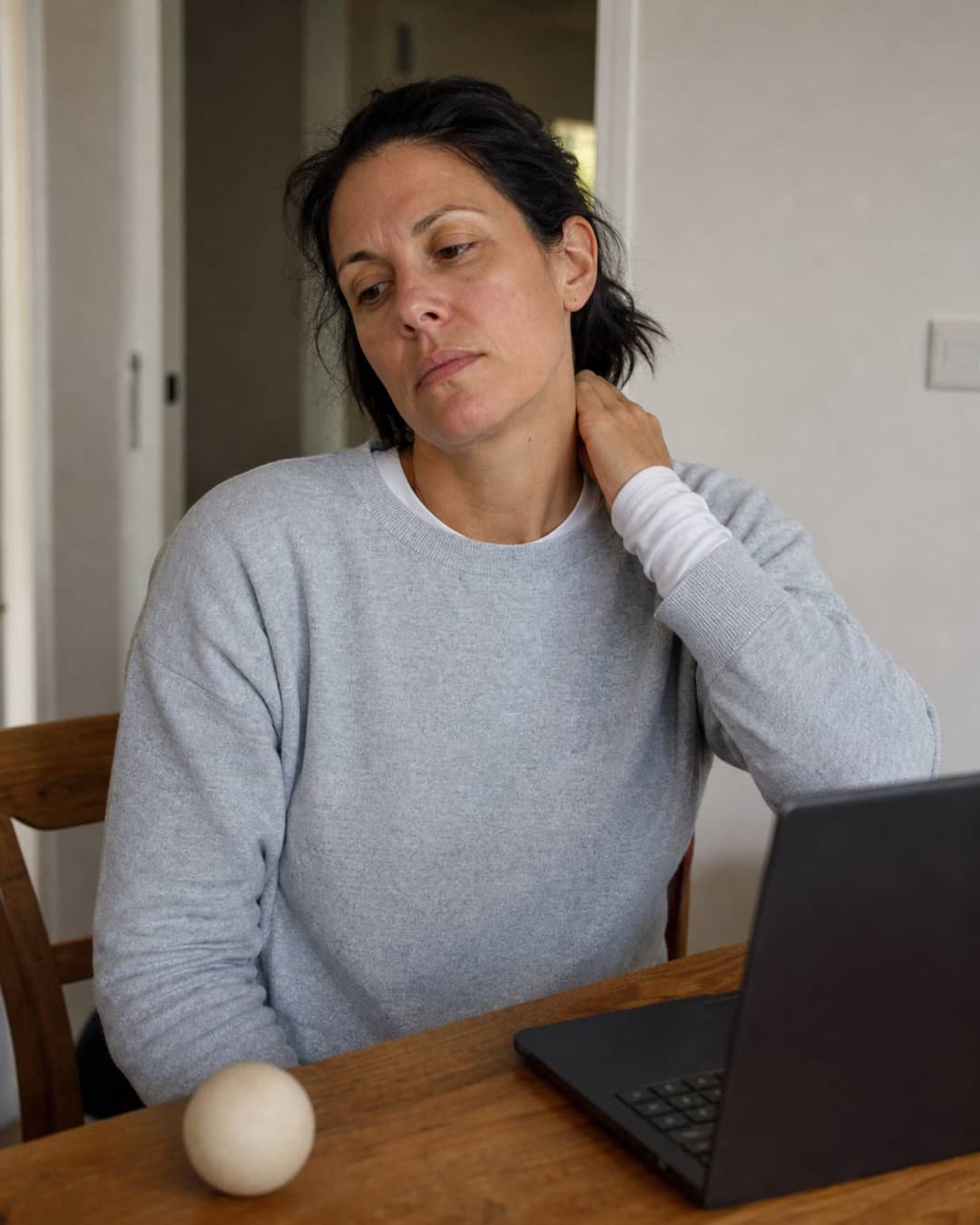
You can put your finger on it in about two seconds. The spot sits right at the junction — not fully neck, not fully shoulder, somewhere in the cord of muscle that bridges the two. It gets hard. It stays hard. And it has a particular quality that most tension doesn't: you can press on it all evening, wake up the next morning, and find it waiting for you in almost exactly the same state.
Most people who have this spot have developed a small ritual around it. They reach up during a meeting, dig in with a thumb. They roll a lacrosse ball against the wall and search for the right position. They pull out a handheld massager and press the head against the area, moving slowly, hoping something shifts. Sometimes there's a moment of relief that feels promising. Then it's back.
The frustration isn't that nothing works at all. It's that nothing works there — at that specific junction — in a way that feels comfortable, precise, and worth repeating. A device that covers the whole shoulder blade doesn't quite reach it. A point-pressure tool can feel like it overshoots. And the neck-and-shoulder massager that seemed like a reasonable purchase? It tends to address everything around the spot without ever quite settling on it.
That pattern is what Avenora KnotEase™ was built to interrupt. It's a wearable device that sits directly at the neck — the exact anatomy where this knot lives — combining heat, vibration, and electrical stimulation in one routine you can actually build a habit around. Not a broader approach that happens to pass through the area. Something that starts where the problem starts.
Here's what most people get wrong about why the knot keeps coming back — and why pressing harder is usually the least productive response.
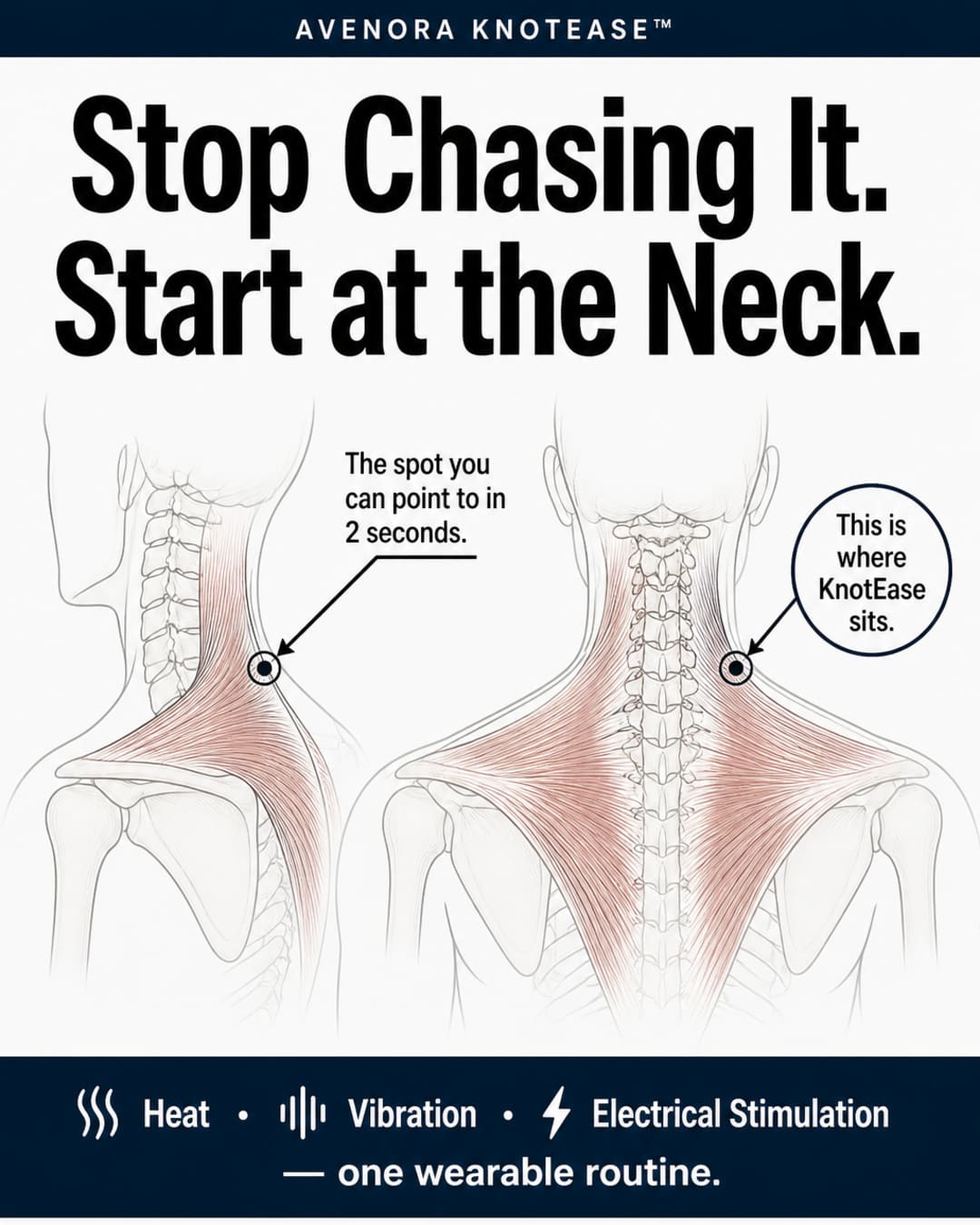
Reason 1 — You Can Name the Spot. That's Actually the Whole Problem.
There's a specific kind of muscle tension that almost announces itself. The knot at the neck–trap junction is like that. You don't have to wonder where it is. You can reach back and locate it in a second, and it has a texture to it — dense, slightly elevated, resistant to pressure in a way the surrounding tissue isn't.
That clarity is useful in some ways. You know exactly what you're dealing with, and you know exactly where to go. But it creates its own trap, because the precision of the location makes you want to respond with equal precision — pressing directly on that point, trying to work it down through sustained pressure, holding it for longer, pushing harder.
The problem is that the knot doesn't respond to pressure the way a typical tight muscle does. The harder you press, the more the surrounding tissue guards. You get a moment of sensation that can feel like progress, but the knot itself doesn't dissolve. It redistributes slightly under your thumb and then reconstitutes. The next morning, it's back.
People who have lived with this spot for more than a few weeks — and most people in this position have had it for months — typically describe two things. First, a growing sense that the spot is unusually stubborn compared to tension elsewhere on their body. Second, a feeling that the self-care tools they've tried are somehow slightly off: they address near the spot, or they address the whole area with a force that feels too blunt for something so specific.
That second observation matters more than it sounds. Because the neck–trap junction is not simply a piece of trapezius. It's where the weight of the head transfers downward, where the cervical curve transitions into the shoulder girdle, and where a dense concentration of secondary muscle attachments converge. It is, structurally, a different zone than the mid-trapezius. Treating it like a generic shoulder knot is why the generic approach keeps falling short.
What this spot needs isn't more pressure, applied in the same place, with the same tool. It needs a different starting point. And that's exactly where the habit itself becomes the obstacle.
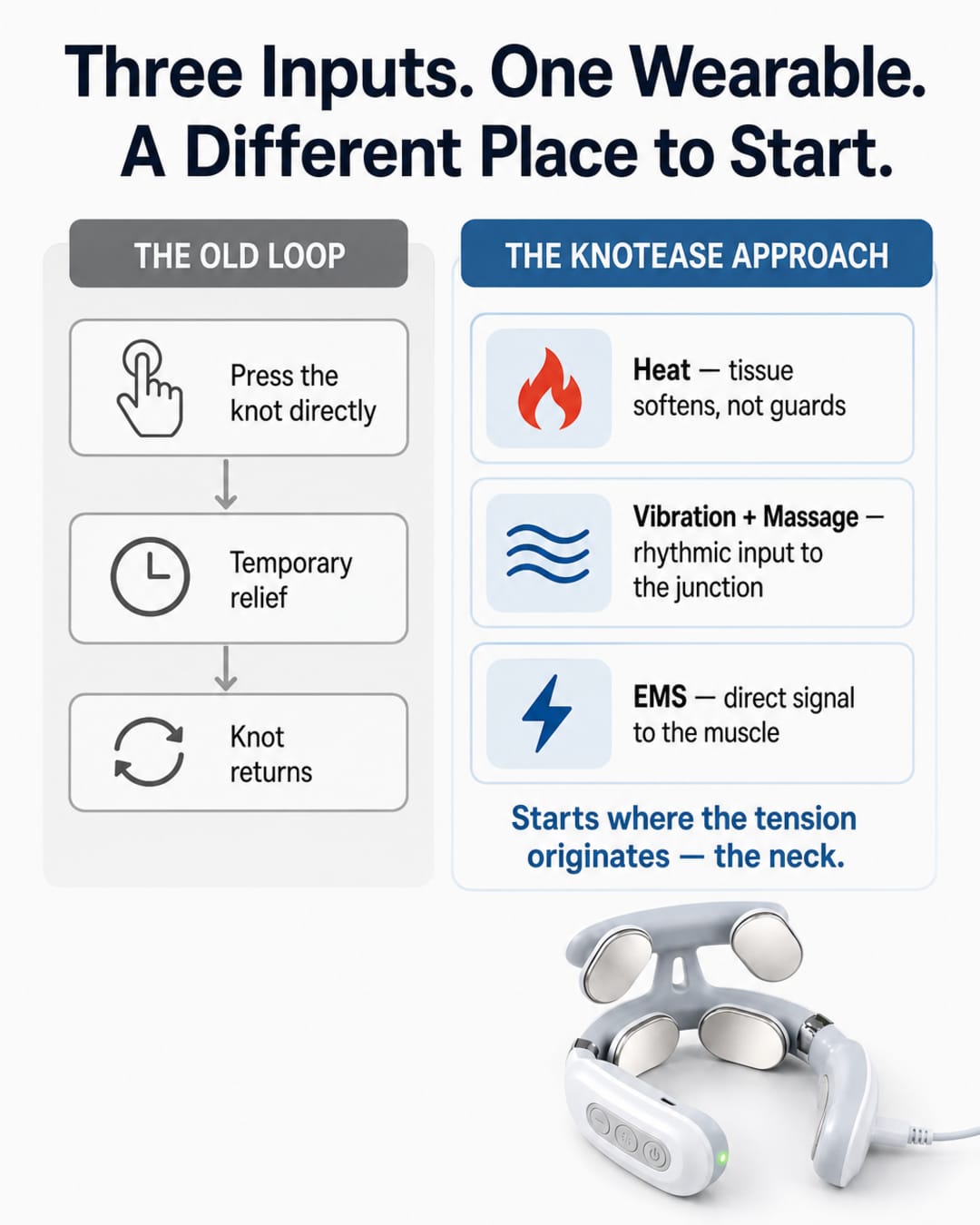
Reason 2 — Why the Knot Keeps Winning: The Mechanism Most Self-Care Misses
The pattern most people follow looks like this: feel the knot → apply pressure to the knot → get temporary relief → feel the knot again. It's logical. It's also, for many people with this specific spot, almost perfectly circular.
Here's what that loop misses. The neck–trap junction is not a standalone muscle belly. It is a convergence point. The muscles that attach or pass through it — the upper trapezius fibers, the levator scapulae, the sternocleidomastoid at its inferior run — are all responding to signals coming from further up the chain, including the position and load of the cervical spine. When the neck holds sustained tension, the trap and levator respond. When those muscles stay shortened, they pull on the junction point. And the junction point develops that familiar, insistent tightness.
Pressing directly on the junction point addresses the symptom at the symptom's location. It doesn't address the environment that produced it.
Avenora KnotEase takes a different approach. Instead of asking you to press on the spot, it sits at the neck — the place the tension originates from — and delivers three simultaneous inputs: heat, which encourages the local tissue to soften rather than guard; vibration and massage, which provides rhythmic mechanical input to the area; and electrical stimulation (EMS), which delivers a direct signal to the muscle itself. These three work together as part of a consistent, repeatable comfort routine.
The device doesn't require you to find the exact point of maximum tenderness with your thumb. It doesn't ask you to hold an awkward position or apply force. It sits at the neck, where this knot's context lives, and gives you a routine that addresses the junction from its actual origin point — not just the spot where it announces itself.
This is not a claim that EMS dissolves every knot or that heat is a cure. It's a recognition that starting at the neck, with a consistent combined input, is a fundamentally different approach than applying point pressure to the symptom. Confirm the actual device's specifications and intended use before deciding whether this mechanism fits your situation.
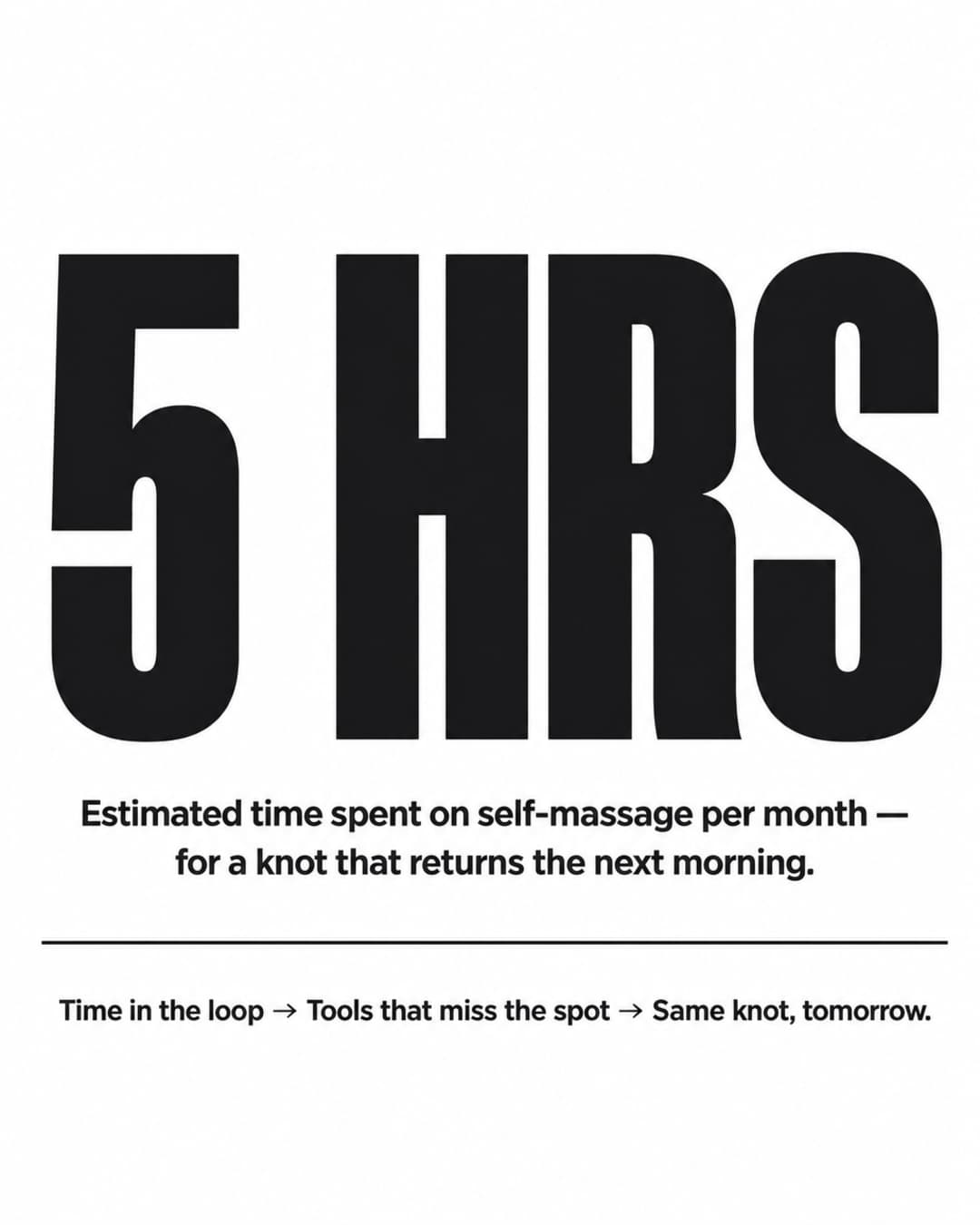
Reason 3 — Every Week You Stay in the Loop Has a Price You Don't Always Notice
There's an economic argument buried inside a stubborn muscle knot, and most people don't run the numbers because the cost comes in units that aren't money. Not at first.
Consider what the loop actually costs over a month. Fifteen minutes of self-massage three or four evenings a week — rolling a ball, pressing with a thumb, pulling out a device that covers approximately the right area but not precisely — multiplied across four weeks. That's somewhere between four and six hours of your own attention devoted to a spot that still returns the next morning. Add the morning stiffness that affects how the first hour of your day feels. Add the distraction during a meeting or a phone call when the knot tightens. Add the particular fatigue of carrying something unresolved — the slight cognitive overhead of knowing a spot needs attending to, again, this evening.
None of those are a medical claim. They're the simple arithmetic of a recurring situation that doesn't get resolved.
The professional alternative is also worth noting. A focused massage session with a skilled therapist, targeted at this specific area, runs somewhere between 60 and 120 dollars in most US markets, and most therapists will tell you that one session doesn't resolve a chronic spot — you need a series. The tools people buy to avoid that cost — the various balls, the handheld devices, the heated wraps — each carry their own price tag, and many of them add to a drawer of things that helped a little, once, in slightly the wrong way.
A different routine costs less than most people's monthly therapy co-pay. What changes the math is whether it's a routine that actually fits the spot in question — or another piece of equipment that addresses the neighborhood without landing on the address.
That gap between what you've already tried and what the spot actually needs is exactly what a head-to-head comparison makes visible.
Reason 4 — Why the Broad-Area Massager and the Pressure Ball Both Miss, and What Changes When the Device Fits the Zone
Here's where most people realize the problem wasn't their effort — it was the tool's geometry.
The market for neck and shoulder self-care is not small. There are handheld percussion devices, broad strap massagers that drape over both shoulders, kneading units designed for the whole upper back, and point-pressure balls in various materials and densities. Each of them has a genuine use case. None of them were designed specifically for the neck–trap junction.
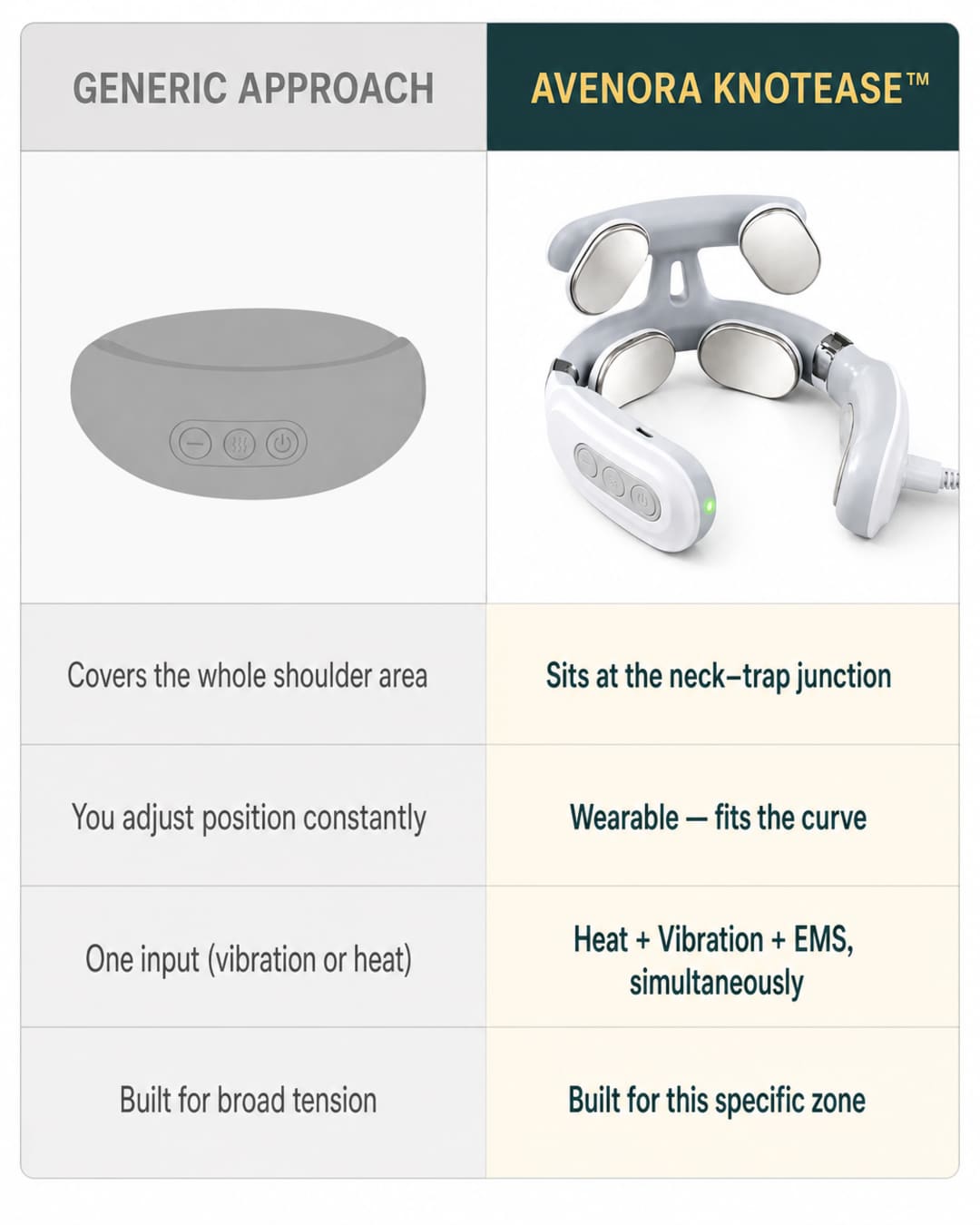
The broad-area devices have a geometry problem. They're built to cover a large surface — the full trapezius, both sides, the middle back — which makes them effective for generalized tension but imprecise for a specific junction. When you place one at your neck, the contact points are where the device wants to be, not necessarily where your knot is. You end up adjusting position every thirty seconds trying to triangulate.
The pressure ball has a different problem. It's extremely precise, which sounds like an advantage. But applied to a spot that's already sensitized — tight, slightly reactive, carrying the day's accumulated load — point pressure requires a calibration most people don't have in their own thumbs at nine in the evening. Too much force and the muscle guards harder. Too little and nothing registers. The window is narrow, the feedback is immediate, and the margin for getting it wrong in a way that leaves the area more uncomfortable the next morning is real.
KnotEase doesn't ask you to calibrate. It sits at the neck — the horseshoe fits the curve of the cervical spine and rests on the trap junction naturally. The heat, vibration, and EMS inputs begin from a fixed, consistent position. There is no searching for the spot. The device is worn at the anatomy the knot belongs to.
The comparison below is not a claim that competing products fail for everyone. It's an observation about geometry and use case: a device built for the neck–trap junction is starting from a different address than one built for broad coverage or generic point pressure.
Reason 5 — What the Spot Feels Like When the Routine Actually Fits It
It's useful to be precise about what a shift in this area actually feels like — because it doesn't happen the way most people expect the first time they try a different approach.
The change isn't dramatic. It isn't the cinematic release of something snapping loose. It's subtler and, in some ways, more satisfying: the spot becomes less present. The particular insistence with which it announces itself — the way it rises to the surface when you turn your head or reach across your desk — quiets. Not permanently, not after one session, but across a consistent routine, the quality of the tension changes. It becomes something the body is managing rather than fighting.
The other thing that changes is the habit around it. People who have found a routine that fits this zone describe a reduction in the specific low-grade vigilance of carrying an unresolved knot — the awareness of it during meetings, the reaching-and-pressing that happens semi-automatically throughout the day. When the evening routine actually addresses the area, the next morning starts differently.
Maya — who has had this spot on the right side of her neck for most of her working career — describes it this way: the knot is still something she's aware of, but she's no longer at war with it. She has a routine she can count on. That's not nothing. That is, for most people in this position, exactly the thing they've been looking for.
That consistency — a routine that fits the zone, that you can actually build a habit around — is the whole offer.

If you want to understand exactly how the device is worn, how the three inputs work together, and whether this is the right fit for your situation, the full product detail is worth a look.
What Customers Are Saying
"I've tried so many things for that specific spot where my neck meets my shoulder. This is the first routine that actually feels like it's in the right place. Simple, practical, and easy to use every evening."
Rachel T., Austin, TX
"The heat and the vibration together feel completely different from anything I'd tried before. I appreciate that it just sits there — I'm not having to hold a weird position or adjust every few seconds."
M. Okafor, Chicago, IL
"I was skeptical because I've accumulated a whole drawer of things that sort of helped. This one actually addresses where the tension is. It does what it says, and that's honestly all I needed."
James R., Portland, OR
That Spot Has Taken Enough of Your Evenings
You've already spent more time on this knot than you'd like to admit. You know where it is. You've pressed it, rolled it, heated it, and woken up to find it exactly where you left it. The routine you've been repeating hasn't been working — not because you haven't tried hard enough, but because the tool and the zone have never quite matched.
What the last few minutes have described isn't a new category of miracle. It's a different starting geometry: a device that sits at the neck — where this knot lives, where the tension originates — and delivers heat, vibration, and electrical stimulation as one consistent, wearable routine. Not somewhere nearby. Not across the whole shoulder. At the junction.
Here's what changes when the routine finally fits the spot:
- The knot stops being the thing you think about at 9 PM — because you have something to actually do about it, not another approximation.
- The searching stops — no more adjusting a ball against the wall, repositioning a handheld device, hunting for the right angle with a thumb.
- The mornings start differently — when the evening routine addresses the area honestly, the next day carries less of what the last one left behind.
- The drawer of "almost" tools stops growing — one device, one zone, one habit.
- Your attention goes back to the things the knot was pulling it away from — the meeting, the call, the book, the quiet of an evening without a maintenance ritual that doesn't deliver.
You've seen the mechanism. You know why the loop you've been in stays closed. You know what it would take to open it — not harder pressure on the same spot, but a different device at a different address, delivering something your thumb and your lacrosse ball have never been able to combine.
The cost of reading this and returning to tonight's routine is another evening of the same result. The knot will be there. The tools that have been falling short will still be falling short. The only thing that changes is whether you've given yourself a different starting point.
See how KnotEase actually works — the fit, the inputs, the routine — and decide for yourself.