You Can't Be Beside Her Every Time She Gets Out of the Car
For anyone who's ever watched Mom find something — anything — to hold onto, and quietly hoped it would hold.
There's a moment that stays with you.
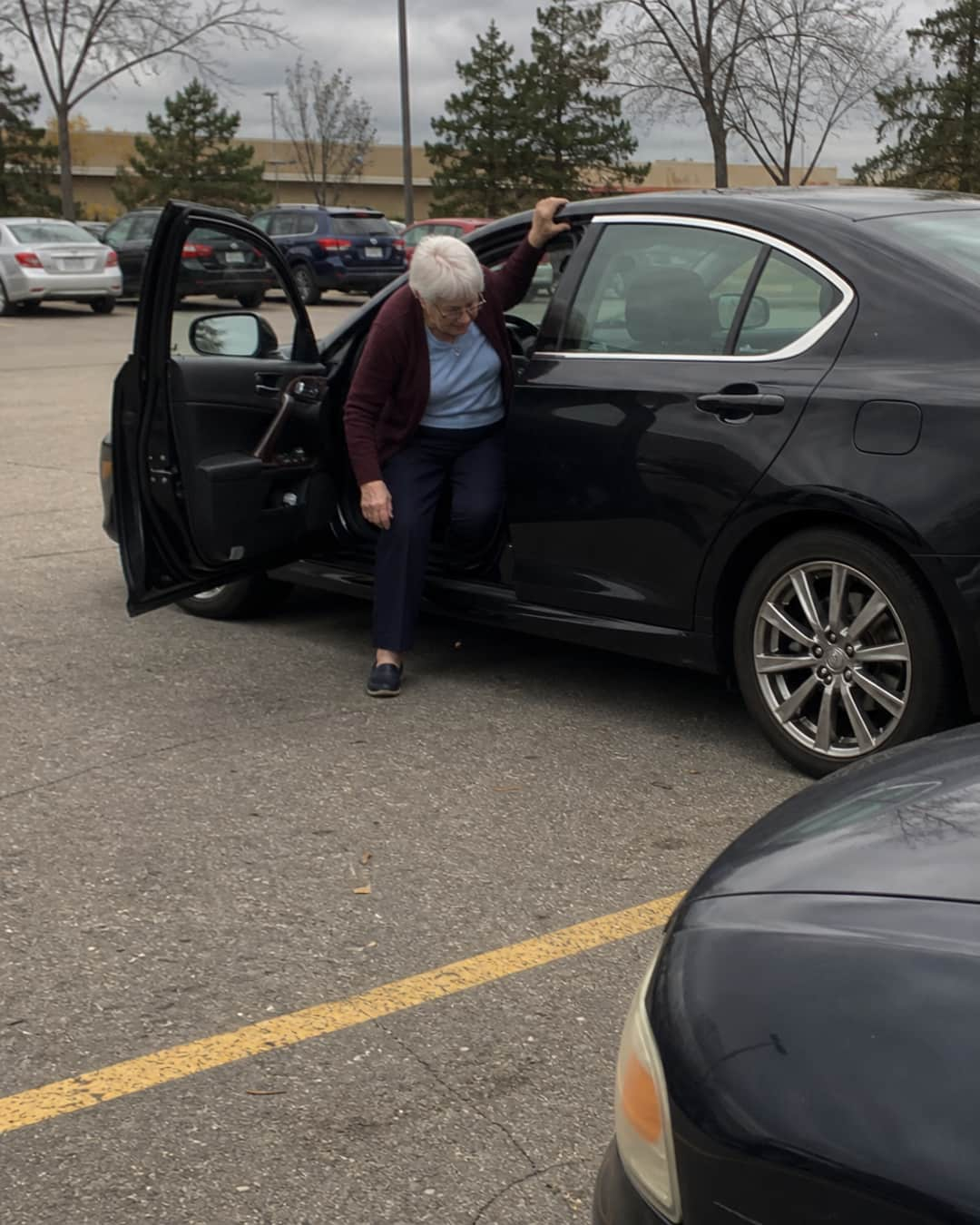
You're walking around to the passenger side, or you're watching from the front door, or she's texting you "home safe" from a parking lot you weren't at — and you realize she's been doing this alone every single time. Getting out of the car. Pushing herself up from that seat. Grabbing whatever happens to be within reach: the door frame, the top of the door itself, sometimes the steering wheel, none of which were designed for that.
It doesn't feel like a crisis. That's the thing. It just feels like a slow drip of something you can't quite name.
You love her. You call. You visit when you can. But you have a life thirty minutes away, or two hours away, or across the city — and she has a life too, one she's not about to stop living. She still drives herself to the pharmacy. To the hairdresser. To the grandkids' school events. She doesn't want your help. She wants to handle it herself.
What she doesn't have — what nobody thought to give her — is something designed for that exact moment. Not a wheelchair grab bar. Not a walker. Just a solid, dedicated handhold for the transition between the seat and standing. Something that's already in the car when she needs it, rated to hold, and simple enough that she'll actually use it.
That's the gap this solves. And once you see it, you can't unsee it.
The Steering Wheel Wasn't Built for This — and Part of You Already Knows It
Watch it happen once and you see it every time after that.
She reaches forward when she's ready to get out. Her hand finds the steering wheel, or the top of the door, or the lip of the roof — whatever's closest. She pushes and pulls at the same time, trying to find the leverage that her legs used to provide on their own. Sometimes it works fine. Sometimes there's a pause that lasts just a second too long, and that second is the one you keep thinking about.
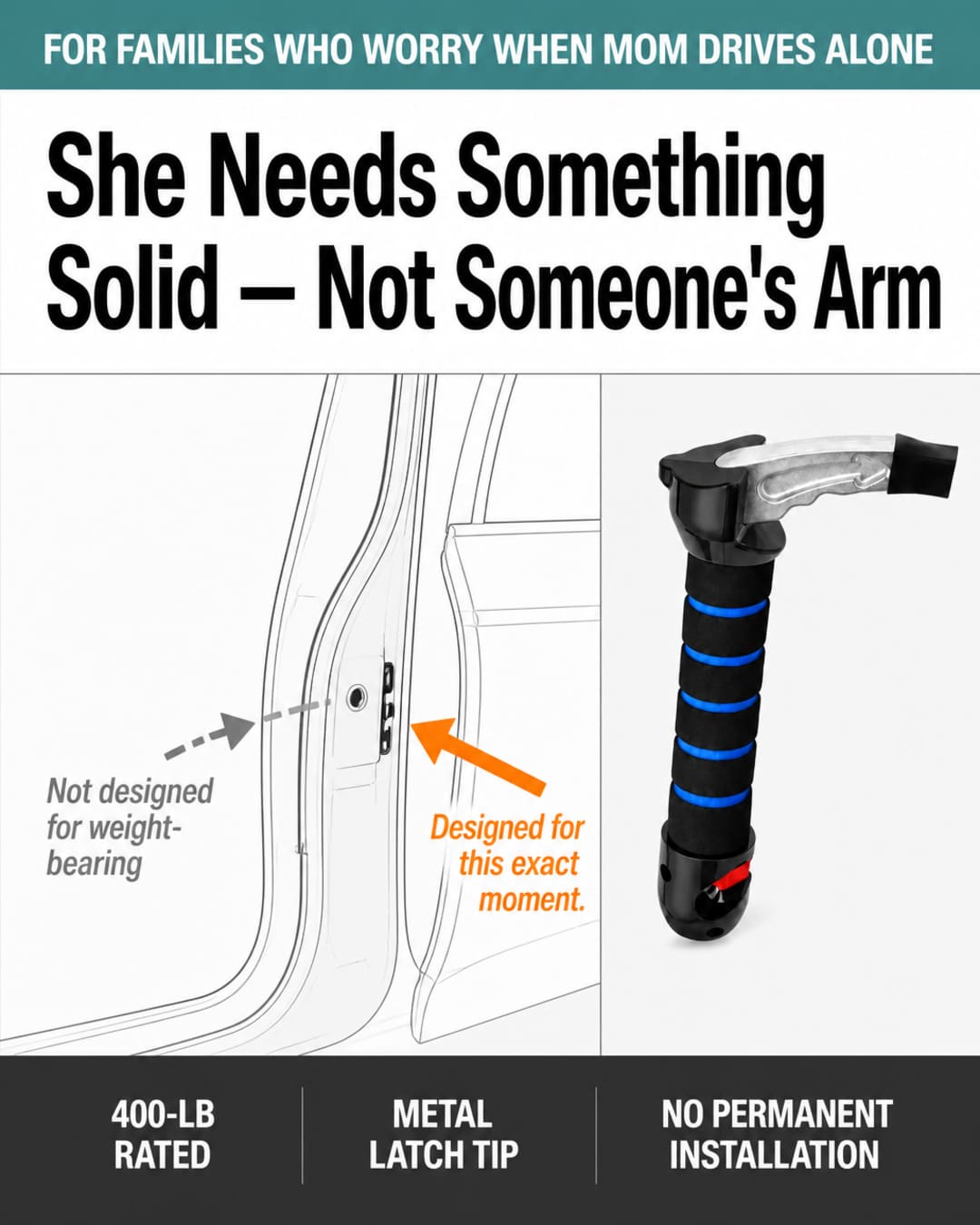
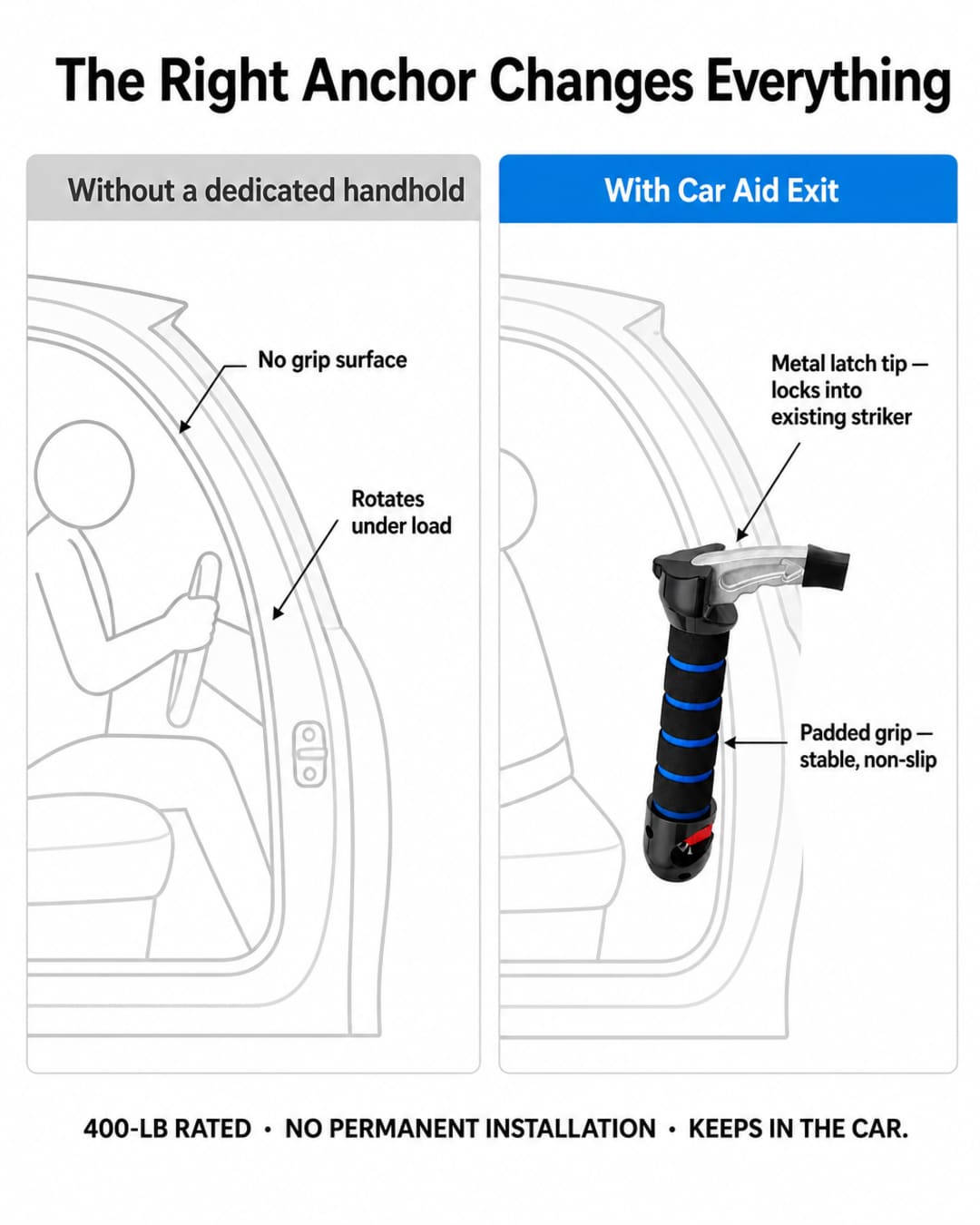
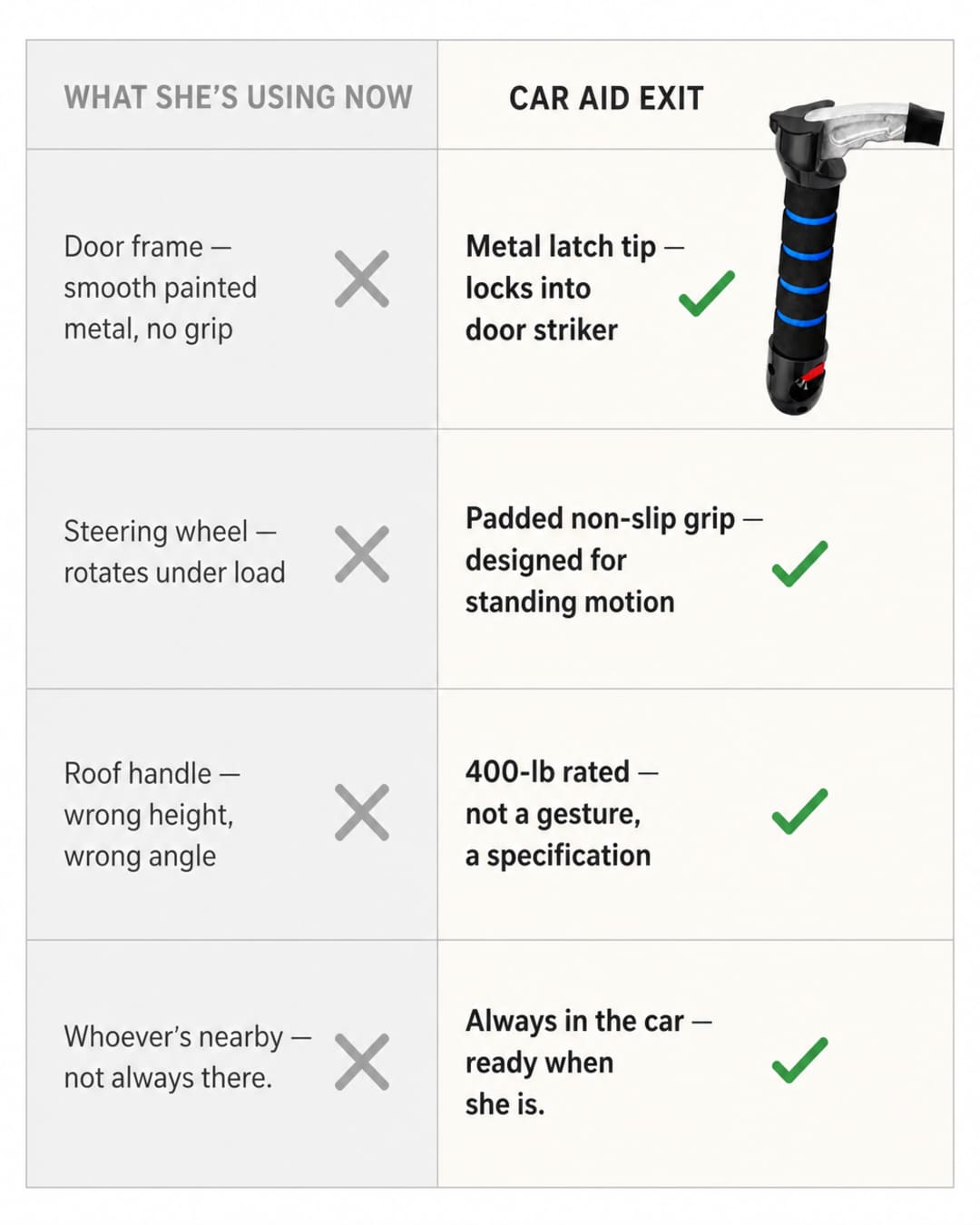
None of what she's grabbing was designed to hold a person's weight during a standing motion. The steering wheel turns. The door frame has no real grip surface. The roof edge is smooth and far away. These are not handholds. They're workarounds, and she's been using them because there wasn't anything else.
The problem isn't weakness. It isn't frailty. It's leverage — or the absence of it. Getting out of a low car seat requires the same physics regardless of age: you need a stable point above your center of gravity to push against as you stand. Without that point, you compensate. You torque your back, overload one arm, rush the movement, or pause and wait for someone.
She's been compensating. Every single trip.
A pattern that runs through nearly every family in this situation: "She told me she was fine. I watched her and I knew she wasn't." The fine is real — she's managing. The worry is also real — managing isn't the same as safe, and managing alone in a parking lot is not the same as managing with someone watching.
The question isn't whether she needs help. The question is what kind of help actually lets her stay independent.
What She's Actually Missing Isn't Strength — It's a Stable Point
Here's what most people get wrong when they see a parent struggling to get out of the car: they assume the problem is physical decline, and they respond by offering more help. An arm to hold. A hand extended from the parking lot. Someone hovering near the car door.
That's not wrong, exactly. But it misses the actual mechanism.
The reason getting out of a low car seat is hard isn't purely muscular. It's mechanical. When you sit low with your knees bent and your feet forward, your center of gravity is behind your feet. To stand, you have to move your weight forward while simultaneously pushing upward — and you need a fixed point above waist height to do that efficiently. Without that fixed point, the movement is unstable from the start.
Car Aid Exit solves this at the source. The metal latch tip inserts into the vehicle's existing door latch striker — the metal loop built into every car's door frame — giving a locked, stationary anchor point. The padded non-slip grip sits at the right height and angle for a standing motion. She holds, pushes, stands. That's the full movement. No modification to the car, no permanent installation, no learning curve.
The 400-lb weight rating means this isn't a gesture toward safety. It's an engineering specification. The anchor point holds. The grip holds. The mechanism is real.
What this changes isn't her body. It's the physics of the moment she's been navigating with whatever happened to be in reach. One dedicated tool, built for the exact task, changes the entire transition — not because she's stronger, but because she finally has something designed to hold.
The Real Cost of a Grip She Can't Trust
Nobody does the math on this out loud. But it lives in the back of every family's head.
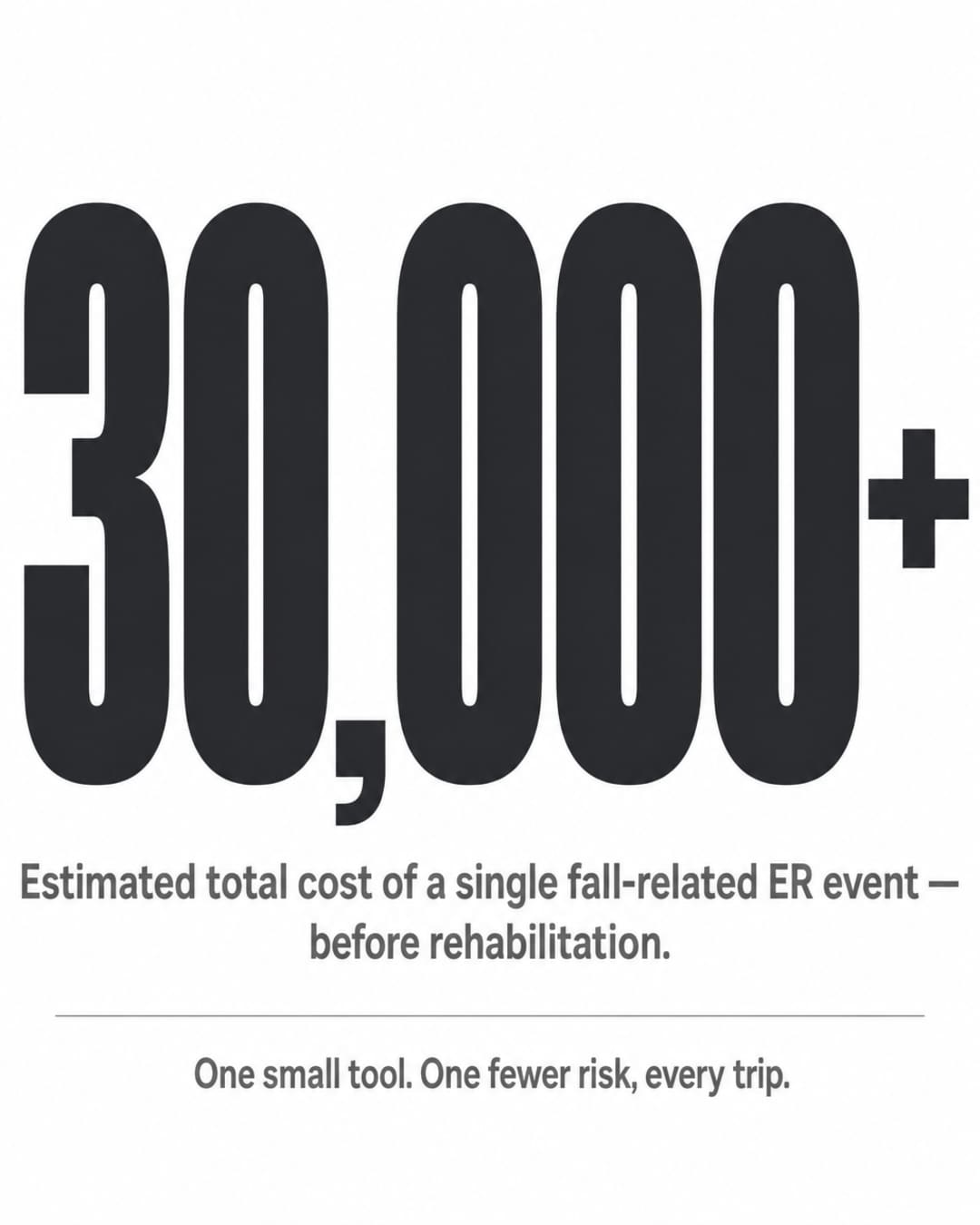
A trip to the emergency room for a fall-related injury in the United States carries an average out-of-pocket cost that runs into thousands of dollars after deductibles — before rehabilitation, before follow-up visits, before any indirect costs like time off work for the family member who becomes a caregiver. That's the financial floor. It doesn't count the months of reduced mobility, the loss of independence, the change in how she sees herself.
But the cost that accumulates before any of that is quieter and harder to measure. It's the mental overhead carried by the adult child who calls after every appointment to make sure she got back to the car okay. It's the internal calculation that runs every time she goes somewhere alone: is today the day something goes wrong? It's the slow erosion of confidence — hers and yours — that comes from a recurring moment that was never properly solved.
The worry isn't irrational. It's a reasonable response to a real, repeated exposure. She gets out of the car at minimum once per trip, every trip, every day she drives. That's not one risky moment. It's a variable that shows up every single time.
The cost of a tool designed to stabilize that moment is, by any measure, a rounding error on what the alternative might one day cost. That's not a scare tactic. That's arithmetic.
Whatever She's Grabbing Right Now — This Is Different
There's a practical question worth sitting with: what, specifically, is the alternative?
The door frame is painted metal with no texture and no purchase. The steering wheel rotates the moment any lateral load goes through it. The roof handle above the window (where it exists) is positioned for bracing during driving, not for lifting a person out of a seat. None of these were engineered to serve as an exit handhold. They are incidental contact points that happen to be nearby.
Car Aid Exit is the only item in this comparison that was designed for this specific moment.
The metal latch tip creates a locked connection to the vehicle's structural latch striker — not a friction grip on a surface, but an actual mechanical connection. The padded non-slip grip is positioned and shaped for a standing push. The unit is compact enough to stay in the door pocket or center console, which means it's there on the days she goes out alone, the days you're not with her, the days nobody is watching.
The comparison isn't between a good option and a great option. It's between something designed for this task and a collection of surfaces that were designed for something else entirely.
She deserves the one that was built for her.
"I kept telling her to be careful. She didn't need me to tell her to be careful. She needed something she could hold onto." — language pattern from families using vehicle-assistance tools
What It Looks Like When She Handles It Herself
The moment is easy to imagine because you've pictured its opposite so many times.
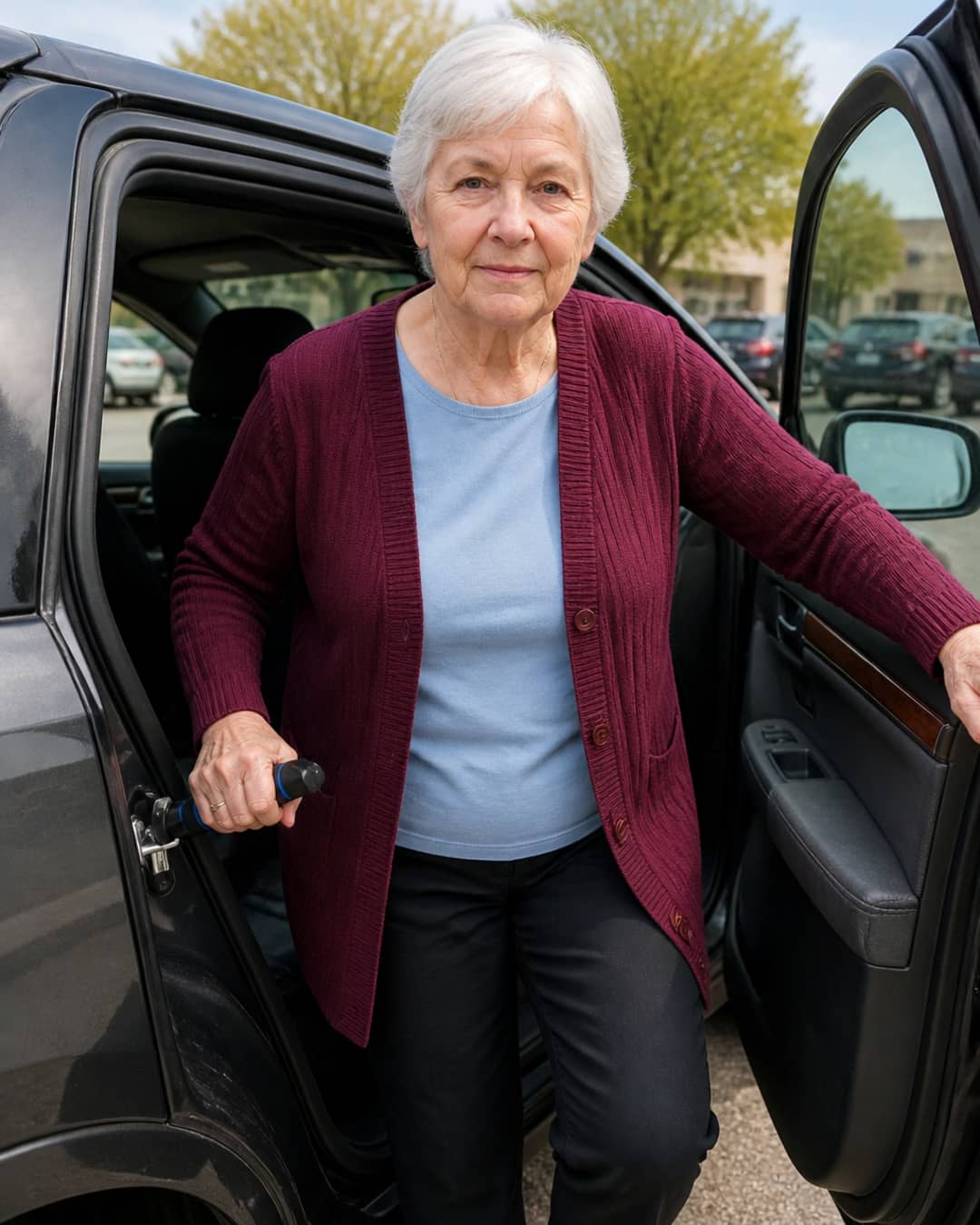
She parks. She opens the door. She reaches for the Car Aid Exit — it's in the door pocket, where it lives now, the same place every time. She inserts the metal latch tip into the striker, feels it seat, and uses the padded grip to push herself upright in one clean motion. Then she tucks it back, closes the door, and walks into wherever she was going.
Nobody helped her. Nobody was waiting. Nobody needed to be.
This is the part that's hard to put a price on: she didn't have to call ahead to ask someone to meet her in the parking lot. She didn't have to wait for someone to come around the car. She didn't have to manage the look on her face that means she's asking for help while trying not to ask for help. She just got out of the car.
Her confidence in that movement changes when the movement feels stable. That's not a soft claim — it's what happens when a mechanical problem gets a mechanical solution. The physics work. She works. The whole chain works.
And you stop holding your breath every time she says she's going out.
That's what you were looking for when you started reading this. Not a product. Not a feature list. A version of the next year that has one less thing in it to worry about — because she has one more thing to hold onto.
What Families Are Saying
4.8 out of 5 · 247 customer reviews
"I gave this to my mom after watching her push off the steering wheel every time she got out. She uses it on every trip now — it just sits in the door pocket and it's there when she needs it. Practical and well made."
Linda M., Columbus OH
"My mother lives alone and still drives herself everywhere. This gives her something solid to hold without making her feel like she needs a walker. She appreciates that it stays in the car and doesn't require any setup."
James T., Portland OR
"Simple idea, but it actually works. Mom said the grip feels secure and she doesn't have to think about it — she just reaches for it. Easy to use, easy to store. Worth it."
Karen D., Charlotte NC
She's Still Going Out Alone. The Question Is What She'll Hold Onto When She Gets There.
You've seen the moment. The improvised grip. The pause that lasts a beat too long. The workaround she's been using because nobody thought to give her something designed for this.
Here's what that moment keeps costing, every single trip she takes:
- A grip she can't actually trust — the door frame, the steering wheel, whatever's close — none of it was built for this movement
- A standing transition done without a stable anchor — compensating with back and arm load that was never part of the design
- A family carrying low-grade anxiety on her behalf — the calls after appointments, the held breath when she goes somewhere alone
- Her confidence in a moment that should feel routine — eroded slowly, invisibly, by a mechanical problem that was never solved
- One more thing she has to manage without the right tool — when the right tool is small, simple, and already exists
Car Aid Exit was designed for this exact moment. Metal latch tip. Padded non-slip grip. 400-lb rated. Compact enough to live in the car permanently. No installation. No learning curve. Ready every time she reaches for the door.
Every trip she takes between now and whenever you give her one is a trip where she's making do with whatever happens to be in reach. That's the cost of waiting. Not a dramatic cost — just a quiet one that shows up every single day.
See how it works. The full details are one click away.