The Moment Nobody Talks About: When Getting Out of the Car Became Hard for Dad
There's a specific look.
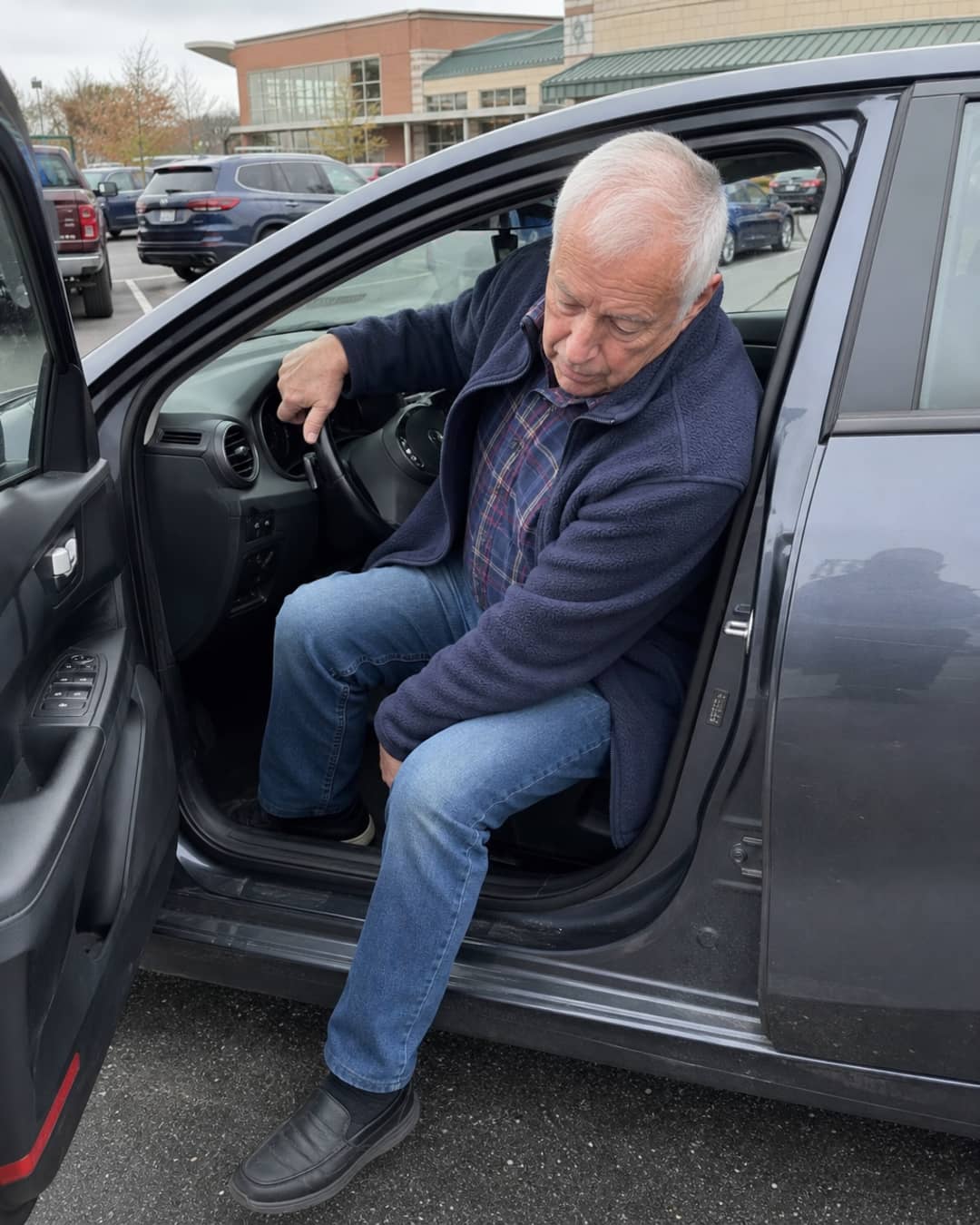
You're in the passenger seat, or you're standing in the driveway, and Dad pulls into the spot and cuts the engine. Then there's this pause — a beat too long — before he does anything. He shifts his weight. His hand finds the steering wheel. He pushes, pulls, twists slightly. And eventually he's out.
He doesn't say anything. You don't say anything. It happened fast enough that maybe it didn't happen at all.
But you saw it. And somewhere between that parking lot and wherever you went next, a small worry settled in — the kind that doesn't announce itself, it just starts living in the background. What happens when I'm not there? Not on the highway. Not on the big stuff. In the parking lot of the grocery store. In his own driveway, on a Tuesday afternoon, when you're two hours away.
That's not a dramatic fear. It's a specific one. And specific fears don't need reassurance — they need a practical answer.
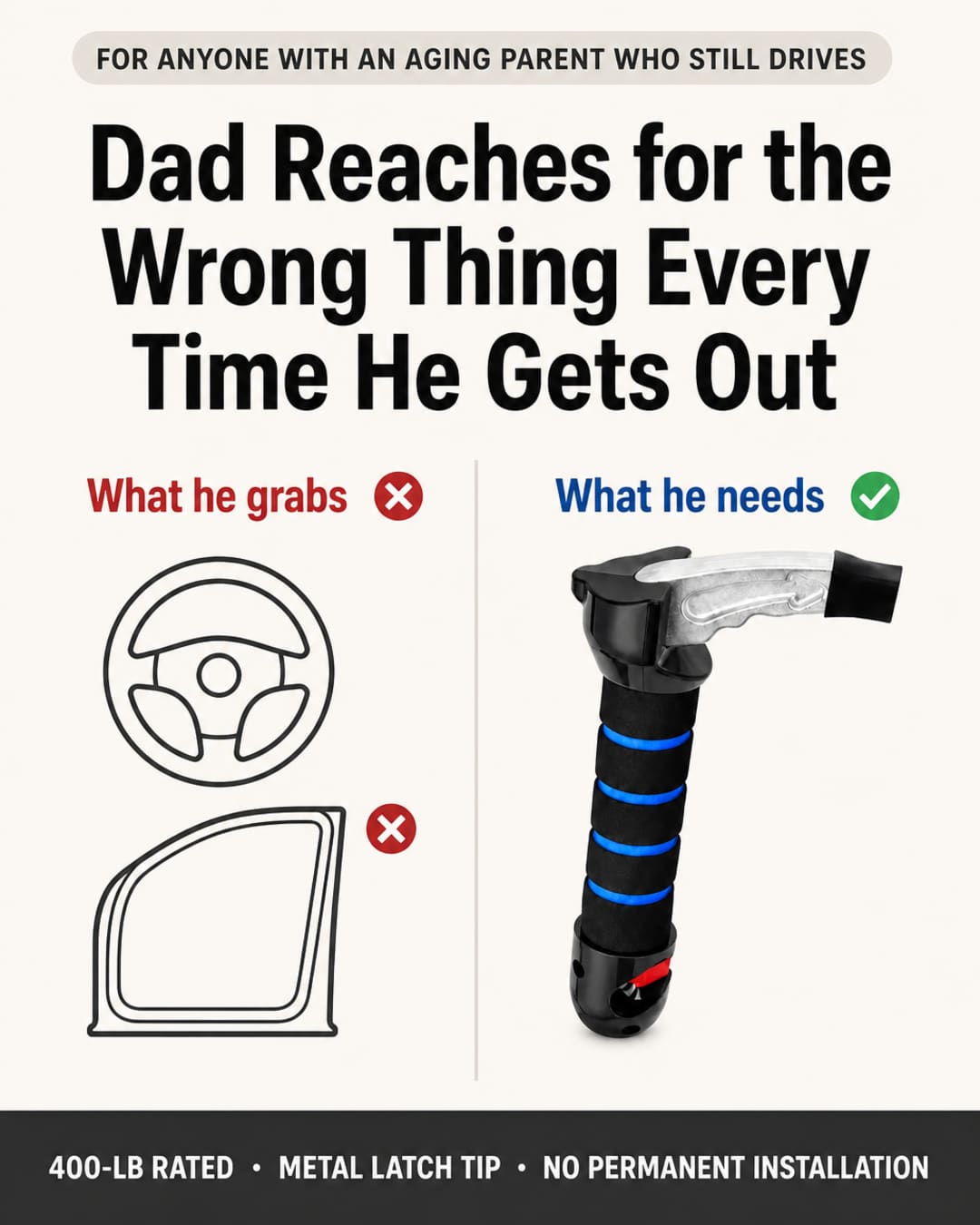
The reason Dad struggles in that moment isn't weakness. It's geometry. Getting out of a low car seat, from a near-horizontal position, requires leverage — a stable point to push against or pull from while your feet find the ground. The steering wheel isn't that point. The door frame isn't that point. They were designed for something else entirely. That gap between what Dad reaches for and what would actually help him — that's the problem this article is about.
He's Not Getting Weaker. He's Missing One Thing.
There's a version of this story where you start worrying about whether Dad should still be driving. Whether it's time to have that conversation. Whether you need to start planning around him.
But most of the time, that's not what's actually happening.
Dad can drive. He navigates the route, manages the traffic, parks without incident. The part that's become a problem is the 30 seconds at the end — swinging his legs out, finding his footing, getting upright from a seat that puts him at knee height. That moment is a physics problem, not a capability problem.
When you get out of a car, your body needs a stable point — something fixed that will hold your weight while you shift from seated to standing. Your arm strength, your leg strength, your balance: all of that works. But it needs somewhere to go. Without a dedicated handhold, the body scans for the nearest fixed point and finds the steering wheel, the door frame, the top of the door. None of those were engineered for that load. The steering wheel tilts. The door swings. And so Dad improvises, every single time, with whatever is closest.
Car Aid Exit is a handle that locks into the window frame of a vehicle door — the metal latch tip seats at the top of the door opening — giving a fixed, stable handhold rated to 400 lbs. He pushes off, it holds. The movement that had become effortful goes back to being a motion.
One thing was missing. That's the whole story.
And yet, the thing most people do when they notice Dad struggling is either offer their arm — which doesn't scale — or they start worrying about the wrong problem entirely.
The Steering Wheel Wasn't Built for This — and Your Body Knows It

Here's the misunderstanding that drives the whole problem.
Most people assume that when Dad reaches for the steering wheel or the door frame, it's working well enough. He gets out, doesn't he? Slowly, a little awkwardly, but he gets there. So the improvised grip gets normalized. It becomes the method.
What doesn't get counted is the cumulative load. The steering wheel is connected to a column not engineered for a 180-lb lateral pull repeated daily over months. The door — when it's the support point — swings under load. Neither surface gives the wrist and elbow the angle they need; the grip forces a slightly twisted reach across the body, concentrating load on the shoulder joint rather than distributing it through the arm and core.
Car Aid Exit works differently at the mechanical level. The metal latch tip hooks over the top of the door frame — a fixed, structural part of the vehicle — before the handle is loaded. The grip itself is padded and non-slip, which means the hand position is stable without requiring the compensating squeeze most older adults unconsciously apply to an uncertain surface. The force path goes from hand → padded grip → rigid handle body → metal latch → door frame. Everything in that chain is doing the job it was made to do.
The result isn't just a better grip. It's a cleaner motion — one that uses the body's natural push-to-stand mechanics instead of fighting around them.
No tools. No permanent installation. It comes in and out of the door in seconds, then tucks away. Dad keeps it in the car.
That's the mechanism. What most people don't stop to calculate is what the missing mechanism has been quietly costing.
The Driveway Fall That Didn't Have to Happen
This section isn't about catastrophizing.
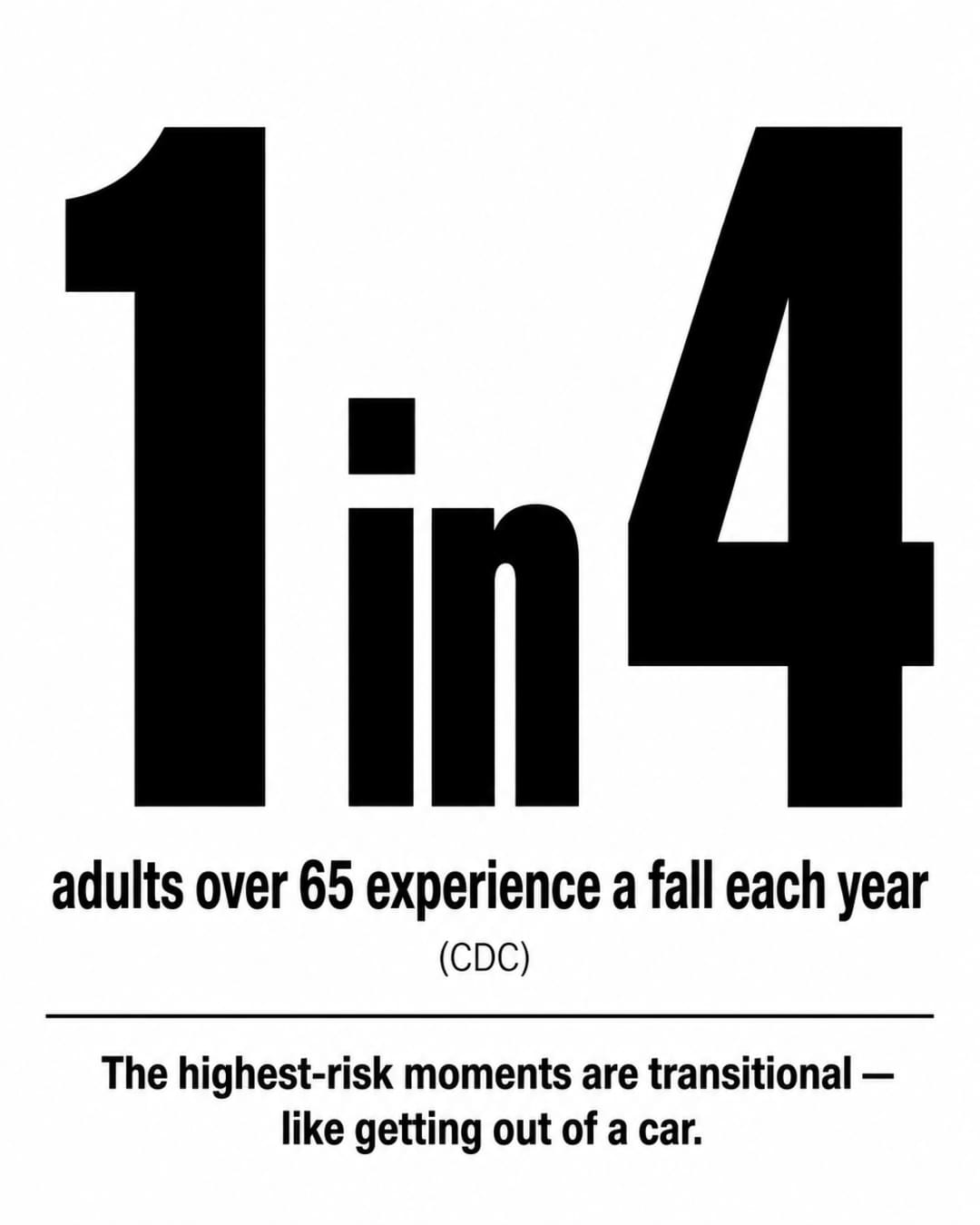
It's about a number: one in four adults over 65 experiences a fall each year, according to the CDC. Falls are the leading cause of injury-related emergency visits in that age group. And the highest-risk moments are transitional ones — the moments of moving between one position and another, exactly the kind of movement that getting out of a car involves.
None of that means Dad is going to fall getting out of his car. Most of the time, he won't. The improvised grip will hold, or he'll catch himself, or he'll be fine.
But "most of the time" is a different thing from "a handle rated to 400 lbs."
The practical cost of doing nothing is this: every time Dad gets out of that car without a dedicated handhold, the outcome depends on a steering wheel that wasn't designed for that load, a door frame that wasn't engineered to be gripped, and whatever energy and balance Dad has on that particular day at that particular moment. Some days that's fine. Other days — when he's tired, when the surface is wet, when he had a long drive — the margin is narrower than it looks.
Car Aid Exit doesn't guarantee an outcome. What it does is remove an unnecessary variable. It replaces three improvised, unrated contact points with one rated, stable, purpose-built one.
The cost of the handle is one thing. The cost of the alternative — on the wrong Tuesday, in the wrong parking lot — is the number that doesn't fit neatly into a sentence.
Knowing what's at stake and still not having an answer for it is one kind of discomfort. But there's a second kind — the one that comes when Dad himself feels like he needs help every time he gets out of a car.
A Door Handle and a Purpose-Built Grip Walk Into a Parking Lot
The question isn't whether Dad can get out of the car. He can. The question is what he's holding when he does it.
Most alternatives to Car Aid Exit fall into two categories: they're things that were designed for something else entirely, or they're products that require permanent modification to the vehicle — drilling, adhesive mounting, hardware installation. For someone who leases, who drives different vehicles, or who simply doesn't want to modify a car for a temporary need, those aren't real options.
Compare the two approaches directly.
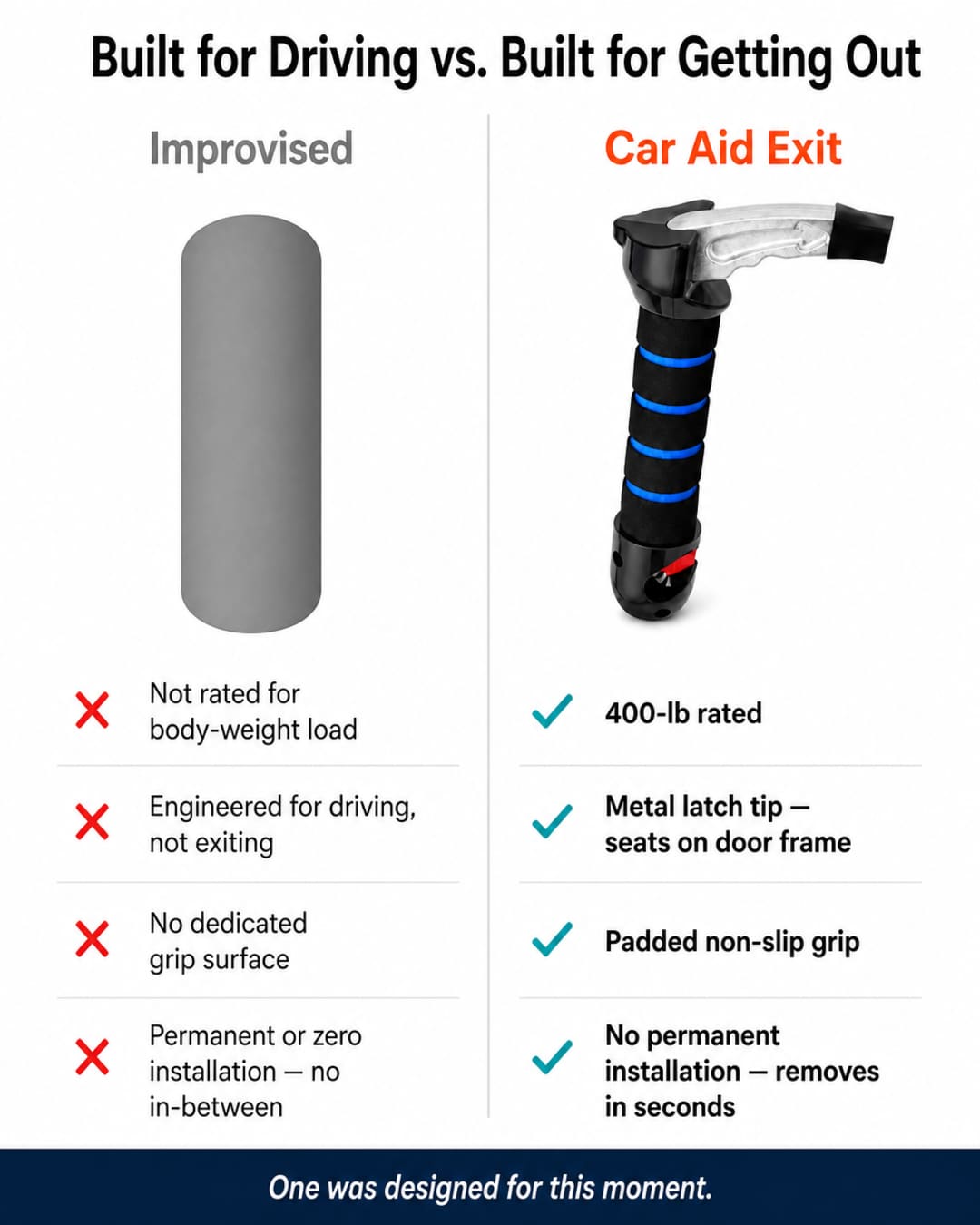
The steering wheel, door frame, or door edge: zero purchase cost, universal availability, not rated for vertical or lateral body-weight loads, engineered for driving — not exiting. No grip texture designed for the hand. No stability in the direction the force actually travels during a car exit.
Car Aid Exit: metal latch tip seats in the door frame without drilling or adhesive; padded, non-slip grip surface; 400-lb load rating; removes in seconds; stores in the car. Permanent installation: none. Tools required: none.
The comparison isn't between a cheap option and an expensive one. It's between something repurposed and something built for the job. One of those is why Dad's current grip works most of the time. The other is why "most of the time" is no longer the standard you're willing to settle for.
Once the mechanism is right and the comparison is clear, what's left is the part that actually matters — what it looks like on the other side.
What It Looks Like When He Gets It Right

Picture the same parking lot. Same car. Same man.
He pulls in, cuts the engine. Opens the door. Reaches — but this time the reach is a short one, to the driver's side door pocket where the handle lives. He clips the metal tip to the top of the door frame, feels it seat, and wraps his hand around the padded grip.
Then he gets out. Cleanly. In one motion, with something solid to push against. His feet find the pavement. He closes the door and walks toward the entrance.
He didn't wait. He didn't reach across his body for a steering column. He didn't negotiate with the door frame. He used a tool that was built for that exact 15 seconds — and then the tool went back in the pocket, and he went about his day.
That's the transformation. Not dramatic. Not a montage. Just an ordinary moment that went the way it should have gone all along.
Car Aid Exit doesn't change who Dad is. It doesn't make him feel like he needs help. It gives him something he can use himself, quietly, every time — without your arm, without waiting, without the look.
If you want to see exactly how Car Aid Exit works — the latch, the grip, the load rating — the full details are on the product page.
What Customers Are Saying
"Got this for my father after watching him struggle every time he got out of his SUV. He keeps it in the door pocket and uses it every single day. Practical, solid, and he didn't feel like I was making a big deal out of it."
Karen M. — Portland, OR
"Dad is 74 and still drives himself everywhere. This clips in and out in seconds and tucks away neatly. He called me the day it arrived to say it actually works. That was enough for me."
D. Hartley — Columbus, OH
"Well made, easy to understand, and does exactly what it says. No permanent installation, no fuss. Gave me a lot less to worry about when Dad is out on his own."
Sandra R. — Tampa, FL
He's Been Getting Out of That Car Alone Every Day. The Question Is What He's Holding.
Every time Dad has pulled into a parking lot this week, he's made that same improvised reach. The steering wheel. The door edge. Whatever is closest.
It worked. Probably it worked fine.
But you already know that "probably fine" is not where you want to leave this.
- He already has the strength. What's been missing is a stable point rated to hold it — 400 lbs, metal latch tip, purpose-built for a car door.
- The installation concern goes away. No drilling, no adhesive, no permanent modification. It clips in and comes out in seconds.
- He keeps it himself. Compact enough for a door pocket, ready every time he opens that door — whether you're there or not.
- It preserves the thing that matters. Dad doing it himself, without waiting for your arm, without feeling like the ordinary task became a moment.
- There was one gap. A dedicated handhold. That's all this is. And it's the one thing that every improvised alternative has never actually been.
You've watched him reach for the wrong thing. You've done the math on what the wrong Tuesday in the wrong parking lot might cost. You know this is a small, practical, immediately useful thing — the kind of gift that doesn't sit in a closet because it solves a real problem every single day.
The landing page has the full product details, how the latch works, and everything else you want to confirm before you decide.